Shadows of Forgotten Ancestors
Related Products
The Nature of Things
The acclaimed translation of the classic poem at the heart of Stephen Greenblatt’s The Swerve “A plague . . . tests us in unique ways. . . . Only if you can face the invisible bullets all around us, and still keep calm, remain rational, and somehow find it possible to take pleasure in life, have you learned the lesson that [The Nature of Things] set out to teach.” —Stephen Greenblatt, The New Yorker Lucretius’ poem On the Nature of Things combines a scientific and philosophical treatise with some of the greatest poetry ever written. With intense moral fervour he demonstrates to humanity that in death there is nothing to fear since the soul is mortal, and the world and everything in it is governed by the mechanical laws of nature and not by gods; and that by believing this men can live in peace of mind and happiness. He bases this on the atomic theory expounded by the Greek philosopher Epicurus, and continues with an examination of sensation, sex, cosmology, meteorology, and geology, all of these subjects made more attractive by the poetry with which he illustrates them. For more than seventy years, Penguin has been the leading publisher of classic literature in the English-speaking world. With more than 1,700 titles, Penguin Classics represents a global bookshelf of the best works throughout history and across genres and disciplines. Readers trust the series to provide authoritative texts enhanced by introductions and notes by distinguished scholars and contemporary authors, as well as up-to-date translations by award-winning translators.
The Secret of the Heart
Kahlil Gibran reveals his vision of the soul and understanding of the world—past, present, and future—in this rich sampling of more than twenty works. Prose tales, fables, and poems evoke the mystic East and form a world at once powerful, tender, joyous, and melancholy. This collection, penned when Gibran was still a young writer, reveals many of the themes and styles plumbed throughout his life, including his lifelong struggle against injustice in “The Crucified,” his heart-wrenching lament for a Lebanon shackled by tradition and politics in “My Countrymen,” and his masterful use of symbolism and simile in “The Secrets of the Heart.”
A writer with infinite abilities, Gibran continually seeks true beauty, no matter the form.
The Greek Myths (Volume 1)
Volume 1 of Robert Graves classical translation of Greek Myth is both reference and entertainment. Covering Myths 1 through 104, this Volume tells the stories of Endymion, Daedalus, Pygmalion, etc. This contains detailed cross-references and indexes.
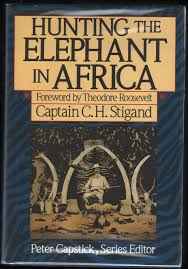
Hunting the Elephant in Africa
The author describes his adventures in Africa hunting for elephants, lions, buffalo, and other big-game animals
Recently Viewed
The Anatomy of Human Destructiveness
How can we explain man’s lust for cruelty?
In a world in which violence in every form seems to be increasing, Erich Fromm — the author of numerous best-selling books — has treated this haunting question with depth and scope in the most original and far-reaching work of his brilliant career.
Fromm goes beyond the present battle lines of controversy between instinctivists like Lorenz, who argue that man’s destructiveness has been inherited from his animal ancestors, and behaviorists like Skinner, who maintain that there are no innate human traits since everything is the result of social conditioning. Conceding that there is a kind of aggression which man shares with animals, Fromm shows that it is defensive in nature, designed to insure survival. On the other hand, malignant aggression, or destructiveness, in which man kills without biological or social purpose, is peculiarly human and not instinctive; it is part of human character, one of the passions, like love, ambition, and greed.
From this theoretical position Fromm studies
both the conditions that elicit defensive aggression and those that cause genuine destructiveness. Drawing on the most significant findings of neurophysiology, prehistory, anthropology, and animal psychology, he presents a global and historical study of human destructiveness that enables readers to evaluate the data for themselves.
Although deeply indebted to Freud, Fromm emphasizes social and cultural factors as well. Destructiveness is seen in terms of the dreams and associations of many patients and of historical figures such as Stalin — an extreme example of sadism; Himmler — an example of the bureaucratic-sadistic character; and Hitler. The analysis of Hitler, following a detailed clinical discussion of necrophilia as a form of malignant aggression, offers a detailed analytical understanding of Hitler’s character, in a masterful new form of psychobiography that is one of the high points of this brilliant book.
With the concepts of a malignant Oedipus complex and of necrophilia, Fromm revises Freud’s “death instinct” and makes a significant contribution to psychoanalytic theory. An appendix on the history of Freud’s theories on aggression will be welcome to all those who wish to know the development of the master’s thought on this subject.
Utilizing anthropological evidence, Fromm also argues that primitive societies — the hunters and food-gatherers — were the least aggressive, and that exploitation and war result from the growth of civilization and the advent of patriarchal societies.
Certain to arouse controversy because of its criticism of various contemporary doctrines, this book will nevertheless be welcomed for its solid, triumphant vindication of human dignity and for its appeal to men and women to change their lives and the social-political environment in order to create new possibilities for human growth.


There are no reviews yet.