


| Author | W.H.T. Gairdner |
|---|---|
| Publisher | Kitab Bhavan |

Al-Ghazali’s Mishkat Al-Anwar (The Niche for Lights)
Please Login to view access options.
This book can only be request by members.
Additional information
Reviews (0)
Be the first to review “Al-Ghazali’s Mishkat Al-Anwar (The Niche for Lights)” Cancel reply
Related Products

The Secret of the Heart
Highlights:
Kahlil Gibran reveals his vision of the soul and understanding of the world—past, present, and future—in this rich sampling of more than twenty works. Prose tales, fables, and poems evoke the mystic East and form a world at once powerful, tender, joyous, and melancholy. This collection, penned when Gibran was still a young writer, reveals many of the themes and styles plumbed throughout his life, including his lifelong struggle against injustice in “The Crucified,” his heart-wrenching lament for a Lebanon shackled by tradition and politics in “My Countrymen,” and his masterful use of symbolism and simile in “The Secrets of the Heart.”
A writer with infinite abilities, Gibran continually seeks true beauty, no matter the form.
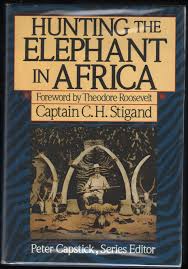
Hunting the Elephant in Africa
Highlights:
The author describes his adventures in Africa hunting for elephants, lions, buffalo, and other big-game animals

Fall of Giants
Highlights:
This is a huge novel that follows five families through the world-shaking dramas of the First World War, the Russian Revolution, and the struggle for votes for women. It is 1911. The Coronation Day of King George V. The Williams, a Welsh coal-mining family, is linked by romance and enmity to the Fitzherberts, aristocratic coal-mine owners. Lady Maud Fitzherbert falls in love with Walter von Ulrich, a spy at the German Embassy in London. Their destiny is entangled with that of an ambitious young aide to U.S. President Woodrow Wilson and to two orphaned Russian brothers, whose plans to emigrate to America fall foul of war, conscription and revolution. In a plot of unfolding drama and intriguing complexity, “Fall of Giants” moves seamlessly from Washington to St Petersburg, from the dirt and danger of a coal mine to the glittering chandeliers of a palace, from the corridors of power to the bedrooms of the mighty.


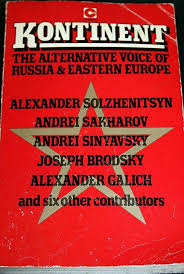
Kontinent: The Alternative Voice of Russia and Eastern Europe
Highlights:
During the last few years many people of great talent have been allowed to emigrate from the Soviet Union.As many of Russia’s best living writers are now living outside their own country, it was recently decided to launch a quarterly journal to which they would all contribute. This journal, KONTINENT, would open a dialogue between these writers and the literary figures in the West interested in the problems of Eastern Europe.This collection is drawn from the first two Russian volumes of KONTINENT, and includes valuable contributions from the most famous ‘stars’ of Russia’s ‘third emigration’. There is the historic controversy between Alexander Solzhenitsyn and Andrei Sakharov, winner of the Nobel Peace Prize; a memorable article by Abram Terz (Andrei Sinyavsky) on the literary process in Russia; a novella by Vladimir Maramzin; and poems by Joseph Brodsky, widely accepted as Russia’s most talented living poet, and by Alexander Galich, whose work is enjoyed in song form by millions of Russians.
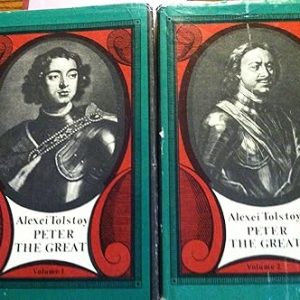
Peter The Great
Highlights:
To Alexei Tolstoy (1883-1945) history, in addition to an artistic theme, was also a means of studying life. The novel “Peter the Great” was preceded by various works on this theme (Peters Day, On the Rack) which depict the formative stages of the authors conception of history. Tolstoy published the first part of the novel in 1929, the second in 1934, working on the third part until the day of his death, yet leaving it unfinished.The novel is dynamic. It shows the epoch and Peter himself, a true national hero of Russia and creator of the Russian state, in all their magnificence and multiplicity, in all their contradictions. The author describes the transformation of Russia into a mighty power. The novel is imbued with pride for Russia and faith in the Russian people. This profoundly realistic work has greatly influenced Soviet writers working in the field of history. Tolstoy won the Stalin Prize for this novel.
Recently Viewed

In the Footsteps of Jesus
Highlights:
Drawing from a variety of evidence, the book reports that many scholars have begun to explore this theory for several reasons: One relates to the various meanings of tektōn, which though translated in the King James Bible as “carpenter,” also can be defined as “skilled worker.” Secondly, conscripting labor from surrounding villages was a familiar operating procedure in Roman vassal states.
The book also suggests that many of the poor and hungry peasants who flocked to Jesus were, in fact, victims of Herod the Great’s rapacious tax policies. Additionally, the book examines Jesus’ treatment and acceptance of women. This issue was recently brought into the spotlight by the controversy over a Coptic papyrus fragment referring to Jesus’ wife, so the discussion in the book is particularly well-timed. IN THE FOOTSTEPS OF JESUS purports that Jesus even counted women among his Apostles. The Gospel of Philip, for example, states that “the companion of the [Savior is] Mary Magdalene.” However, the book cautions that terms such as “companion” or “wife” were often used metaphorically in Jewish and Christian texts of the time.
There are no reviews yet.