

Shopping cart is empty!
Home
Showing 8221–8232 Products of 11194 Products
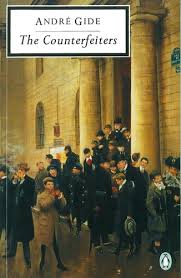
The Counterfeiters
Highlights:
‘It’s only after our death that we shall really be able to hear’
The measured tone of hopeless nihilism that pervades The Counterfeiters quickly shatters any image of André Gide as the querulous and impious Buddha to a quarter-century of intellectuals. In sharp and brilliant prose a seedy, cynical and gratuitously alarming narrative is developed, involving a wide range of otherwise harmless and mainly middle-to-upper-class Parisians. But the setting could be anywhere. From puberty through adolescence to death, The Counterfeiters is a rare encyclopedia of human disorder, weakness and despair.
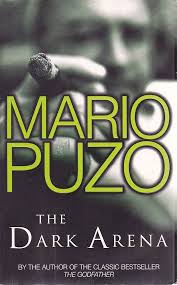
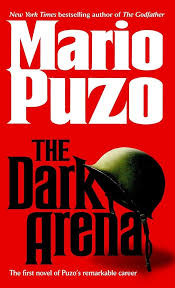
The Dark Arena
Highlights:
Walter Mosca, hardened by the brutality and desecration of three long years of war, returns to the USA a changed man. But he has no sooner arrived than he knows that he must run back to the land of the enemy, to find the woman who accepts the rage and cruelty of the world around her. Back in Germany, where the bitter aftermath of war is everywhere apparent, American cigarettes will buy almost anything. Against this background the love affair between Mosca and his girlfriend Hella moves to a savage climax as vivid and violent as any scene in The Godfather.

The Debacle
Highlights:
Zola’s only purely historical work, this realistic, detailed, and accurate account of France’s defeat in the Franco-Prussian War is a grim testament to the human horrors of war.
The Demon-Haunted World
Highlights:
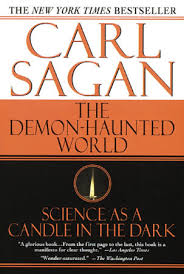
How can we make intelligent decisions about our increasingly technology-driven lives if we don’t understand the difference between the myths of pseudoscience and the testable hypotheses of science? Pulitzer Prize-winning author and distinguished astronomer Carl Sagan argues that scientific thinking is critical not only to the pursuit of truth but to the very well-being of our democratic institutions.
Casting a wide net through history and culture, Sagan examines and authoritatively debunks such celebrated fallacies of the past as witchcraft, faith healing, demons, and UFOs. And yet, disturbingly, in today’s so-called information age, pseudoscience is burgeoning with stories of alien abduction, channeling past lives, and communal hallucinations commanding growing attention and respect. As Sagan demonstrates with lucid eloquence, the siren song of unreason is not just a cultural wrong turn but a dangerous plunge into darkness that threatens our most basic freedoms.

The Demon-Haunted World: Science as a Candle in the Dark
Highlights:
How can we make intelligent decisions about our increasingly technology-driven lives if we don’t understand the difference between the myths of pseudoscience and the testable hypotheses of science? Pulitzer Prize-winning author and distinguished astronomer Carl Sagan argues that scientific thinking is critical not only to the pursuit of truth but to the very well-being of our democratic institutions.
Casting a wide net through history and culture, Sagan examines and authoritatively debunks such celebrated fallacies of the past as witchcraft, faith healing, demons, and UFOs. And yet, disturbingly, in today’s so-called information age, pseudoscience is burgeoning with stories of alien abduction, channeling past lives, and communal hallucinations commanding growing attention and respect. As Sagan demonstrates with lucid eloquence, the siren song of unreason is not just a cultural wrong turn but a dangerous plunge into darkness that threatens our most basic freedoms.

The Fabric of Reality
Highlights:
An extraordinary and challenging synthesis of ideas uniting Quantum Theory, and the theories of Computation, Knowledge and Evolution, Deutsch’s extraordinary book explores the deep connections between these strands which reveal the fabric of reality in which human actions and ideas play essential roles.
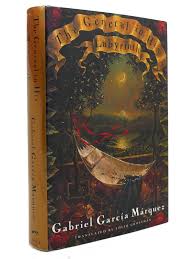
The General in His Labyrinth
Highlights:
General Simón Bolívar, one of the Western Hemisphere’s supreme heroes, embarks on a seven-month voyage down the Magdalena River. Forced from power, made old and ill by the pressures of war, passion, victory, and betrayal, the General examines his life, confronting the phantoms of his past, reliving the campaigns that brought him renown, and remembering the women he loved for a night or a lifetime. On a journey that is at once a fantasy of triumphal progress and a nightmare of loss and delusions, we come to know the Liberator—the dazzling orchestrator of political and military intrigue, as well as the lover, the libertine, the fighter capable of heroism, mercy, and ruthlessness.
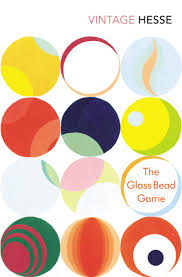
The Glass Bead Game
Highlights:
The final novel of Hermann Hesse, for which he won the Nobel Prize for Literature in 1946, ‘The Glass Bead Game’ is a fascinating tale of the complexity of modern life as well as a classic of modern literature.
Set in the 23rd century, ‘The Glass Bead Game’ is the story of Joseph Knecht, who has been raised in Castalia, the remote place his society has provided for the intellectual elite to grow and flourish. Since childhood, Knecht has been consumed with mastering the Glass Bead Game, which requires a synthesis of aesthetics and scientific arts, such as mathematics, music, logic, and philosophy, which he achieves in adulthood, becoming a Magister Ludi (Master of the Game).
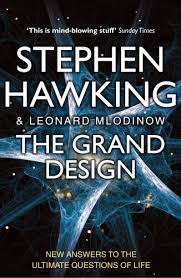
The Grand Design
Highlights:
The three central questions of philosophy and science: Why is there something rather than nothing? Why do we exist? Why this particular set of laws and not some other? No one can make a discussion of such matters as compulsively readable as the celebrated University of Cambridge cosmologist Hawking (A Brief History of Time). Along with Caltech physicist Mlodinow (The Drunkard’s Walk), Hawking deftly mixes cutting-edge physics to answer those key questions. For instance, why do we exist? Earth occupies a “Goldilocks Zone” in space: just the perfect distance from a not-too-hot star, with just the right elements to allow life to evolve. On a larger scale, in order to explain the universe, the authors write, “we need to know not only how the universe behaves, but why.” While no single theory exists yet, scientists are approaching that goal with what is called “M-theory,” a collection of overlapping theories (including string theory) that fill in many (but not all) the blank spots in quantum physics; this collection is known as the “Grand Unified Field Theories.” This may all finally explain the mystery of the universe’s creation without recourse to a divine creator. This is an amazingly concise, clear, and intriguing overview of where we stand when it comes to divining the secrets of the universe.

The Great War for Civilisation: The Conquest of the Middle East
Highlights:
During the thirty years that award-winning journalist Robert Fisk has been reporting on the Middle East, he has covered every major event in the region, from the Algerian Civil War to the Iranian Revolution, from the American hostage crisis in Beirut (as one of only two Western journalists in the city at the time) to the Iran-Iraq War, from the Russian invasion of Afghanistan to Israel’s invasions of Lebanon, from the Gulf War to the invasion and ongoing war in Iraq. Now he brings his knowledge, his firsthand experience and his intimate understanding of the Middle East to a book that addresses the full complexity of its political history and its current state of affairs.
Passionate in his concerns about the region and relentless in his pursuit of the truth, Fisk has been able to enter the world of the Middle East and the lives of its people as few other journalists have. The result is a work of stunning reportage. His unblinking eyewitness testimony to the horrors of war places him squarely in the tradition of the great frontline reporters of the Second World War. His searing descriptions of lives mangled in the chaos of battle and of the battles themselves are at once dreadful and heartrending.
This is also a book of lucid, incisive analysis. Reaching back into the long history of invasion, occupation and colonization in the region, Fisk sets forth this information in a way that makes clear how a history of injustice “has condemned the Middle East to war.” He lays open the role of the West in the seemingly endless strife and warfare in the region, traces the growth of the West’s involvement and influence there over the past one hundred years, and outlines the West’s record of support for some of the most ruthless leaders in the Middle East. He chronicles the ever-more-powerful military presence of the United States and tracks the consequent, increasingly virulent anti-Western–and particularly anti-American–sentiment among the region’s Muslim populations.
Fisk interweaves this history with his own vividly rendered experiences in Iraq, Iran, Afghanistan, Algeria, Israel, Palestine and Lebanon–on the front lines; behind the scenes; in the streets of cities and villages; and inside military headquarters, the hideouts of guerrillas, the homes of ordinary citizens. Here, too, are indelible portraits of Osama bin Laden, Ayatollah Khomeini and Yassir Arafat, among others–all of whom he has met face-to-face–revelatory in their apprehension of the individuals and the ideologies they represent.
Finally, The Great War for Civilisation is the story of journalists in war: of their attempts to report the first, impartial drafts of history, to monitor the centers of power, to challenge authority (“especially . . . when governments and politicians take us to war”) and to battle an increasingly partisan worldwide media in their determination to report the truth.
Unflinching, provocative, brilliantly written–a work of major importance for today’s world.

The Greatest Show on Earth
Highlights:
“Darwin’s Rottweiler” is at it again. Richard Dawkins, the author of The God Delusion, returns with a comprehensive examination of the current state of evidence for evolution. Unlike the aforementioned book, which described religion as a virus of the mind, The Greatest Show on Earth is not primarily about the absence of a supreme being, but rather about the mechanics of species change and diversification. Dawkins draws on his expertise as an evolutionary biologist to describe how the science of the past two centuries has confirmed and refined Darwinian theory.