


Shopping cart is empty!
Home
Showing 7945–7956 Products of 11194 Products

The Tears of the Rajas
Highlights:
The Tears of the Rajasis a sweeping history of the British in India, seen through the experiences of a single Scottish family. For a century the Lows of Clatto survived mutiny, siege, debt and disease, everywhere from the heat of Madras to the Afghan snows. They lived through the most appalling atrocities and retaliated with some of their own. Each of their lives, remarkable in itself, contributes to the story of the whole fragile and imperilled, often shockingly oppressive and devious but now and then heroic and poignant enterprise. On the surface, John and Augusta Low and their relations may seem imperturbable, but in their letters and diaries they often reveal their loneliness and desperation and their doubts about what they are doing in India. The Lows are the family of the author’s grandmother, and a recurring theme of the book is his own discovery of them and of those parts of the history of the British in India which posterity has preferred to forget. The book brings to life not only the most dramatic incidents of their careers – the massacre at Vellore, the conquest of Java, the deposition of the boy-king of Oudh, the disasters in Afghanistan, the Reliefs of Lucknow and Chitral – but also their personal ordeals: the bankruptcies in Scotland and Calcutta, the plagues and fevers, the deaths of children and deaths in childbirth. And it brings to life too the unrepeatable strangeness of their lives: the camps and the palaces they lived in, the balls and the flirtations in the hill stations, and the hot slow rides through the dust. An epic saga of love, war, intrigue and treachery, The Tears of the Rajas is surely destined to become a classic of its kind.
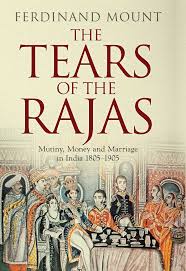
The Tears of the Rajas: Mutiny, Money and Marriage in India, 1805-1905
Highlights:
The Tears of the Rajasis a sweeping history of the British in India, seen through the experiences of a single Scottish family. For a century the Lows of Clatto survived mutiny, siege, debt and disease, everywhere from the heat of Madras to the Afghan snows. They lived through the most appalling atrocities and retaliated with some of their own. Each of their lives, remarkable in itself, contributes to the story of the whole fragile and imperilled, often shockingly oppressive and devious but now and then heroic and poignant enterprise. On the surface, John and Augusta Low and their relations may seem imperturbable, but in their letters and diaries they often reveal their loneliness and desperation and their doubts about what they are doing in India. The Lows are the family of the author’s grandmother, and a recurring theme of the book is his own discovery of them and of those parts of the history of the British in India which posterity has preferred to forget. The book brings to life not only the most dramatic incidents of their careers – the massacre at Vellore, the conquest of Java, the deposition of the boy-king of Oudh, the disasters in Afghanistan, the Reliefs of Lucknow and Chitral – but also their personal ordeals: the bankruptcies in Scotland and Calcutta, the plagues and fevers, the deaths of children and deaths in childbirth. And it brings to life too the unrepeatable strangeness of their lives: the camps and the palaces they lived in, the balls and the flirtations in the hill stations, and the hot slow rides through the dust. An epic saga of love, war, intrigue and treachery, The Tears of the Rajas is surely destined to become a classic of its kind.

The Temple and the Lodge
Highlights:
Over two centuries, the East India Company grew from a loose association of Elizabethan tradesmen into ‘the Grandest Society of Merchants in the Universe’ – a huge commercial enterprise which controlled half the world’s trade and also administered an embryonic empire. A tenth of the British exchequer’s total revenue derived from customs receipts on the Company’s UK imports; its armed forces exceeded those of most sovereign states. Without it there would have been no British India and no British Empire.John Keay reconstructs this epic of expansionist endeavour from the journals and records of the Company’s employees: the first experimental voyages to the East; the earliest, often disastrous, settlements; the later, often inglorious, wars; and the often venal administrations. The story sweeps from southern Africa to north-west America, and from the reign of Elizabeth I to that of Victoria, abounding in bizarre locations and roguish personalities. From Bombay to Singapore and Hong Kong, the political geography of today is undeniably the creation of the Company.”The first accessible narrative history of the English East India Company which has appeared for some time…Keay recounts his story with the sweep of a James Michener, but one anchored in the meticulous scholarship of historians…Commercial successes and failures, battles and politics from Table Bay to Tokyo Bay are treated with verve and clarity.”
CHRISTOPHER BAYLY, ‘The Observer'”Keay tells the story with skill and anecdotal lightness…Spices are aromatic, mosquitoes bite, the seas roar in Keay’s fact-crammed book, and the narrative races as in a novel.”
ANTHONY BURGESS, ‘The Independent'”Lively and thoroughly literate…an outstandingly wise and balanced account.”
PROFESSOR B. H. FARMER, ‘Geographical Journal'”Enough rumbustious adventure stories to shock and delight any armchair reader.”
RACHEL BILLINGTON, ‘Financial Times ‘Books of the Year”
“About this title” may belong to another edition of this title.
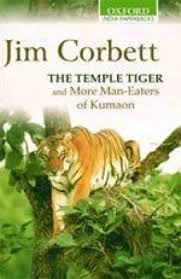
The Temple Tiger and More Man-Eaters of Kumaon
Highlights:
The last of Colonel Jim Corbett’s books on his hunting experiences in India, this volume concludes the narrative of his adventures with tigers begun in the famous Man-Eaters of Kumaon. The author saves his best story for the long concluding chapter in this volume, describing, in The Talla Des Man-Eater, how he embarked on what he feared might be a fatal last test of skill and endurance. As always, he writes with an acute awareness of all jungle sights and sounds, choosing words charged with a great love of humanity, birds, and animals. His calm and straightforward modesty heightens the excitement and suspense of these experiences, in which he continuously risks his life to free the Indian tarai of dangerous man-eaters.

The Temptation of St. Antony (Penguin Classics)
Highlights:
Hallucinations and spectral visitations by people and gods from the past cause Saint Anthony to consider a number of metaphysical questions