



Shopping cart is empty!
Home
Showing 7957–7968 Products of 11194 Products
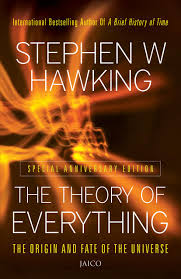
The Theory of Everything
Highlights:
Stephen Hawking is widely believed to be one of the world’s greatest minds: a brilliant theoretical physicist whose work helped to reconfigure models of the universe and to redefine what’s in it. Imagine sitting in a room listening to Hawking discuss these achievements and place them in historical context. It would be like hearing Christopher Columbus on the New World. Hawking presents a series of seven lec-tures—covering everything from big bang to black holes to string theory—that capture not only the brilliance of Hawking’s mind but his characteristic wit as well. Of his research on black holes, which absorbed him for more than a decade, he says, “It might seem a bit like looking for a black cat in a coal cellar.” Hawking begins with a history of ideas about the universe, from Aristotle’s determination that the Earth is round to Hubble’s discovery, over 2000 years later, that the universe is expanding. Using that as a launching pad, he explores the reaches of modern physics, including theories on the origin of the universe (e.g., the big bang), the nature of black holes, and space-time.

The Theory of Social and Economic Organization
Highlights:
This book is an introduction to Max Weber’s ambitious comparative study of the sociological and institutional foundations of the modern economic and social order. In this work originally published in German in 1920, Weber discusses the analytical methods of sociology and, at the same time, presents a devastating critique of prevailing sociological theory and of its universalist, determinist underpinnings. None of Weber’s other writings offers the reader such a grasp of his theories; none displays so clearly his erudition, the scope of his interests, and his analytical powers.
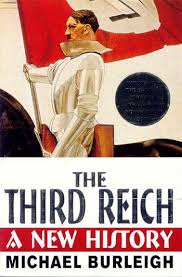
The Third Reich: A New History
Highlights:
In this riveting book, Michael Burleigh sets Nazi Germany in a European context, showing how the Third Reich’s abandonment of liberal democracy, decency and tolerance was widespread in the Europe of the period. He shows how a radical, pseudo-religious movement, led by an oddity with dazzling demagogic talents, seemed to offer salvation to a German exhausted by war, depression and galloping inflation.
‘This is a monumental book.’ Richard Overy, Sunday Telegraph
‘If I had to recommend one book on the Third Reich, this would be it.’ Daniel Johnson, Daily Telegraph
‘It is a breathtaking achievement, at once broader and deeper than any other single volume ever published on the subject. Indeed I would go further: it is the product of authentic historical genius.’ Niall Ferguson, Sunday Times
‘Happily, Michael Burleigh now fills that bibliographical gap, with a readable and highly knowledgeable account of that ghastly period. You will never be bored by this extraordinary book.’ Andrew Roberts, Mail on Sunday

The Thirteenth Tribe
Highlights:
Koestler advances the thesis that Ashkenazi Jews are not descended from the historical Israelites of antiquity, but from Khazars, a Turkic people originating in and populating an empire north of and between the Black Sea and Caspian Sea. Koestler’s hypothesis is that the Khazars – who converted to Judaism in the 8th century – migrated westwards into current Eastern Europe (primarily Ukraine, Poland, Belarus, Lithuania, Hungary and Germany) in the 12th and 13th centuries when the Khazar Empire was collapsing.