


| Author | Jason Goodwin |
|---|---|
| Publisher | Vintage Books |

Lords of the Horizons: A History of the Ottoman Empire
Highlights:
A history of the Ottoman Turks, founders of an empire lasting 600 years and stretching from the Persian Gulf to Hungary, to Algeria. The author describes the harems, the artistic and technological achievements–the cannon was first used by them in the siege of Constantinople–and the religious tolerance to which he attributes the empire’s longevity.
Please Login to view access options.
This book can only be request by members.
Additional information
Reviews (0)
Be the first to review “Lords of the Horizons: A History of the Ottoman Empire” Cancel reply
Related Products

Fall of Giants
Highlights:
This is a huge novel that follows five families through the world-shaking dramas of the First World War, the Russian Revolution, and the struggle for votes for women. It is 1911. The Coronation Day of King George V. The Williams, a Welsh coal-mining family, is linked by romance and enmity to the Fitzherberts, aristocratic coal-mine owners. Lady Maud Fitzherbert falls in love with Walter von Ulrich, a spy at the German Embassy in London. Their destiny is entangled with that of an ambitious young aide to U.S. President Woodrow Wilson and to two orphaned Russian brothers, whose plans to emigrate to America fall foul of war, conscription and revolution. In a plot of unfolding drama and intriguing complexity, “Fall of Giants” moves seamlessly from Washington to St Petersburg, from the dirt and danger of a coal mine to the glittering chandeliers of a palace, from the corridors of power to the bedrooms of the mighty.
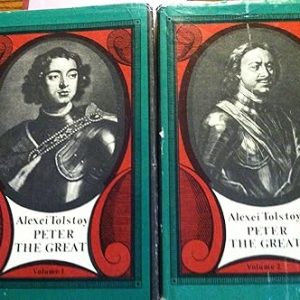
Peter The Great
Highlights:
To Alexei Tolstoy (1883-1945) history, in addition to an artistic theme, was also a means of studying life. The novel “Peter the Great” was preceded by various works on this theme (Peters Day, On the Rack) which depict the formative stages of the authors conception of history. Tolstoy published the first part of the novel in 1929, the second in 1934, working on the third part until the day of his death, yet leaving it unfinished.The novel is dynamic. It shows the epoch and Peter himself, a true national hero of Russia and creator of the Russian state, in all their magnificence and multiplicity, in all their contradictions. The author describes the transformation of Russia into a mighty power. The novel is imbued with pride for Russia and faith in the Russian people. This profoundly realistic work has greatly influenced Soviet writers working in the field of history. Tolstoy won the Stalin Prize for this novel.
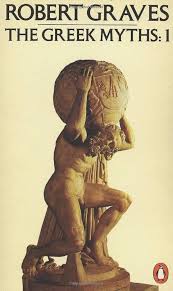
The Greek Myths (Volume 1)
Highlights:
Volume 1 of Robert Graves classical translation of Greek Myth is both reference and entertainment. Covering Myths 1 through 104, this Volume tells the stories of Endymion, Daedalus, Pygmalion, etc. This contains detailed cross-references and indexes.


The Secret of the Heart
Highlights:
Kahlil Gibran reveals his vision of the soul and understanding of the world—past, present, and future—in this rich sampling of more than twenty works. Prose tales, fables, and poems evoke the mystic East and form a world at once powerful, tender, joyous, and melancholy. This collection, penned when Gibran was still a young writer, reveals many of the themes and styles plumbed throughout his life, including his lifelong struggle against injustice in “The Crucified,” his heart-wrenching lament for a Lebanon shackled by tradition and politics in “My Countrymen,” and his masterful use of symbolism and simile in “The Secrets of the Heart.”
A writer with infinite abilities, Gibran continually seeks true beauty, no matter the form.
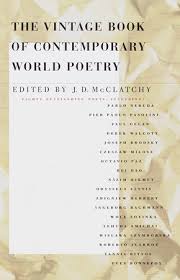
The Vintage Book of Contemporary World Poetry
Highlights:
This groundbreaking volume may well be the poetry anthology for the global village. As selected by J.D. McClatchy, this collection includes masterpieces from four continents and more than two dozen languages in translations by such distinguished poets as Elizabeth Bishop, W.S. Merwin, Ted Hughes, and Seamus Heaney. Among the countries and writers represented are: Bangladesh–Taslima Nasrin Chile–Pablo Neruda China–Bei Dao, Shu Ting El Salvador–Claribel Alegria France–Yves Bonnefoy Greece–Odysseus Elytis, Yannis Ritsos India–A.K. Ramanujan Israel–Yehuda Amichai Japan–Shuntaro Tanikawa Mexico–Octavio Paz Nicaragua–Ernesto Cardenal Nigeria–Wole Soyinka Norway–Tomas Transtromer Palestine–Mahmoud Darwish Poland–Zbigniew Herbert, Czeslaw Milosz Russia–Joseph Brodsky, Yevgeny Yevtushenko Senegal–Leopold Sedar Senghor South Africa–Breyten Breytenbach St. Lucia, West Indies–Derek Walcott
Recently Viewed

An Era of Darkness: The British Empire in India
Highlights:
In 1930, the American historian and philosopher Will Durant wrote that Britain’s ‘conscious and deliberate bleeding of India… [was the] greatest crime in all history’. He was not the only one to denounce the rapacity and cruelty of British rule, and his assessment was not exaggerated. Almost thirty-five million Indians died because of acts of commission and omission by the British-in famines, epidemics, communal riots and wholesale slaughter like the reprisal killings after the 1857 War of Independence and the Amritsar massacre of 1919. Besides the deaths of Indians, British rule impoverished India in a manner that beggars belief. When the East India Company took control of the country, in the chaos that ensued after the collapse of the Mughal empire, India’s share of world GDP was 23 per cent. When the British left it was just above 3 per cent. The British empire in India began with the East India Company, incorporated in 1600, by royal charter of Her Majesty Queen Elizabeth I, to trade in silk, spices and other profitable Indian commodities. Within a century and a half, the Company had become a power to reckon with in India. In 1757, under the command of Robert Clive, Company forces defeated the ruling Nawab Siraj-ud-Daula of Bengal at Plassey, through a combination of superior artillery and even more superior chicanery. A few years later, the young and weakened Mughal emperor, Shah Alam II, was browbeaten into issuing an edict that replaced his own revenue officials with the Company’s representatives. Over the next several decades, the East India Company, backed by the British government, extended its control over most of India, ruling with a combination of extortion, double-dealing, and outright corruption backed by violence and superior force. This state of affairs continued until 1857, when large numbers of the Company’s Indian soldiers spearheaded the first major rebellion against colonial rule. After the rebels were defeated, the British Crown took over power and ruled the country ostensibly more benignly until 1947, when India won independence. In this explosive book, bestselling author Shashi Tharoor reveals with acuity, impeccable research, and trademark wit, just how disastrous British rule was for India. Besides examining the many ways in which the colonizers exploited India, ranging from the drain of national resources to Britain, the destruction of the Indian textile, steel-making and shipping industries, and the negative transformation of agriculture, he demolishes the arguments of Western and Indian apologists for Empire on the supposed benefits of British rule, including democracy and political freedom, the rule of law, and the railways. The few unarguable benefits-the English language, tea, and cricket-were never actually intended for the benefit of the colonized but introduced to serve the interests of the colonizers. Brilliantly narrated and passionately argued, An Era of Darkness will serve to correct many misconceptions about one of the most contested periods of Indian history.
There are no reviews yet.