

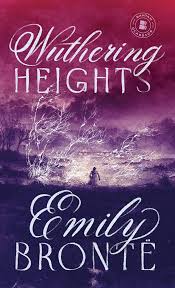
| Author | emily bronte |
|---|---|
| Publisher | BANTUM BOOKS |
Additional information
Reviews (0)
Be the first to review “wuthering heights” Cancel reply
Related Products

Land of Two Rivers
Highlights:
Land of Two Rivers chronicles the story of one of the most fascinating and influential regions in the Indian subcontinent. The confluence of two major river systems, Ganga and Brahmaputra, created the delta of Bengal–an ancient land known as a center of trade, learning and the arts from the days of the Mahabharata and through the ancient dynasties. During the medieval era, this eventful journey saw the rise of Muslim dynasties which brought into being a unique culture, quite distinct from that of northern India. The colonial conquest in the eighteenth century opened the modern chapter of Bengal’s history and transformed the social and economic structure of the region. Nitish Sengupta traces the formation of Bengali identity through the Bengal Renaissance, the growth of nationalist politics and the complex web of events that eventually led to the partition of the region in 1947, analyzing why, despite centuries of shared history and culture, the Bengalis finally divided along communal lines. The struggle of East Pakistan to free itself from West Pakistan’s dominance is vividly described, documenting the economic exploitation and cultural oppression of the Bengali people. Ultimately, under the leadership of Bangabandhu Mujibur Rahman, East Pakistan became the independent nation of Bangladesh in 1971. Land of Two Rivers is a scholarly yet extremely accessible account of the development of Bengal, sketching the eventful and turbulent history of this ancient civilization, rich in scope as well as in influence.
Peter The Great
Highlights:
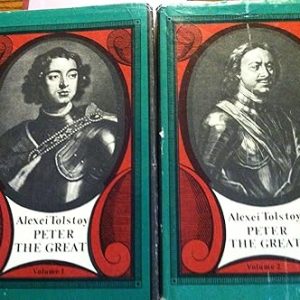
To Alexei Tolstoy (1883-1945) history, in addition to an artistic theme, was also a means of studying life. The novel “Peter the Great” was preceded by various works on this theme (Peters Day, On the Rack) which depict the formative stages of the authors conception of history. Tolstoy published the first part of the novel in 1929, the second in 1934, working on the third part until the day of his death, yet leaving it unfinished.The novel is dynamic. It shows the epoch and Peter himself, a true national hero of Russia and creator of the Russian state, in all their magnificence and multiplicity, in all their contradictions. The author describes the transformation of Russia into a mighty power. The novel is imbued with pride for Russia and faith in the Russian people. This profoundly realistic work has greatly influenced Soviet writers working in the field of history. Tolstoy won the Stalin Prize for this novel.

Fall of Giants
Highlights:
This is a huge novel that follows five families through the world-shaking dramas of the First World War, the Russian Revolution, and the struggle for votes for women. It is 1911. The Coronation Day of King George V. The Williams, a Welsh coal-mining family, is linked by romance and enmity to the Fitzherberts, aristocratic coal-mine owners. Lady Maud Fitzherbert falls in love with Walter von Ulrich, a spy at the German Embassy in London. Their destiny is entangled with that of an ambitious young aide to U.S. President Woodrow Wilson and to two orphaned Russian brothers, whose plans to emigrate to America fall foul of war, conscription and revolution. In a plot of unfolding drama and intriguing complexity, “Fall of Giants” moves seamlessly from Washington to St Petersburg, from the dirt and danger of a coal mine to the glittering chandeliers of a palace, from the corridors of power to the bedrooms of the mighty.

The Secret of the Heart
Highlights:
Kahlil Gibran reveals his vision of the soul and understanding of the world—past, present, and future—in this rich sampling of more than twenty works. Prose tales, fables, and poems evoke the mystic East and form a world at once powerful, tender, joyous, and melancholy. This collection, penned when Gibran was still a young writer, reveals many of the themes and styles plumbed throughout his life, including his lifelong struggle against injustice in “The Crucified,” his heart-wrenching lament for a Lebanon shackled by tradition and politics in “My Countrymen,” and his masterful use of symbolism and simile in “The Secrets of the Heart.”
A writer with infinite abilities, Gibran continually seeks true beauty, no matter the form.
There are no reviews yet.