

| Author | John Nieuhoff |
|---|---|
| Publisher | Asian Educational Services |
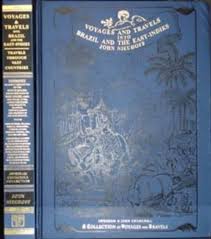
Voyage and Travels into Brazil and the East-Indies
Please Login to view access options.
This book can only be request by members.
Additional information
Reviews (0)
Be the first to review “Voyage and Travels into Brazil and the East-Indies” Cancel reply
Related Products



The Speeches and Table-Talk of the Prophet Muhammad
Highlights:
Aims to present almost all that is most enduring in the public orations and private sayings of the prophet.
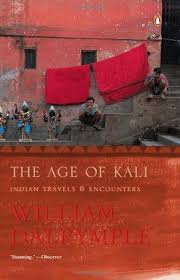
The Age of Kali
Highlights:
The Age of Kali is a panorama of the Indian subcontinent, poised between chaos, westernization and immemorial tradition& It is like Dalrymple s previous books, erudite, engaging and entertaining Martin Gayford, Spectator Books of the Year
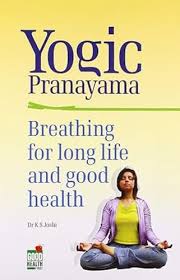
Yogic Pranayama
Highlights:
The book is a complete one of its kind books on Pranayama, an important, yet little known part of Yoga. Breathing exercises are called Pranayamas, which means to control the Prana. Its techniques have been practiced for centuries by ardent students of Yoga in remote ashrams. Pranayama is a very important means for preventing and curing many ailments. By far the most important thing about good breathing is the Prana, or subtle energy of the vital breath. Control of the Prana leads to control of the mind. The aim of this book is to bring the traditional knowledge of this great art to the common man. It is hoped that by reading this book the reader will be well equipped to keep diseases at bay by using the age-old techniques of Pranayama. Pranayama, the control of the breath, essentially entails the modification of our normal process of breathing. This book is an exhaustive look into the art of breathing. It is complete, detailed and technical. Yogic Pranayama is one of the most exhaustive, yet understandable book on breath, the physiology of breath, and the effects of proper breathing on the human organism written. The drawings and diagrams in the book are precise, simple and easy to understand.

Dracula’s Guest and Other Weird Tales
Highlights:
Presents a collection of horror tales, including “Dracula’s guest,” “A gipsy prophecy,” and “The burial of rats” along with notes, a chronology, and Florence Stoker’s original preface.

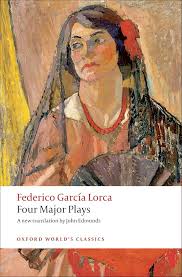
Four Major Plays
Highlights:
In his four last plays Federico García Lorca offered his disturbed and disturbing personal vision to Spanish audiences of the 1930s – unready, as he thought them, for the sexual frankness and surreal expression of his more experimental work. The authentic sense of danger of Lorca’s theatre is finely conveyed here in John Edmunds’s fluent and rhythmic new translations that lend themselves admirably to performance. Contains: Blood Wedding; Yerma; The House of Bernarda Alba; Dona Rosita the Spinster.

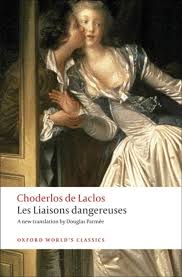
Les Liaisons Dangereuses Owc:Pb
Highlights:
The complex moral ambiguities of seduction and revenge make Les Liaisons dangereuses (1782) one of the most scandalous and controversial novels in European literature. Its prime movers, the Vicomte de Valmont and the Marquise de Merteuil–gifted, wealthy, and bored–form an unholy alliance and turn seduction into a game. And they play this game with such wit and style that it is impossible not to admire them, until they discover mysterious rules that they cannot understand. In the ensuing battle there can be no winners, and the innocent suffer with the guilty. This new translation gives Laclos a modern voice, and readers will be able to judge whether the novel is as “diabolical” and “infamous” as its critics have claimed, or whether it has much to tell us about a world we still inhabit. Douglas Parmee is Retired Fellow of Queen’s College, Cambridge. He is the translator of Nana, Attack on the Mill (Zola) and A Sentimental Journey (Flaubert) for World’s Classics. David Coward is Professor of French at the University of Leeds. He is the translator and editor of Maupassant, de Sade, and Dumas in World’s Classics.
There are no reviews yet.