

| Author | Rajan, Chandra |
|---|---|
| Publisher | Penguin Classics |

The Loom of Time: A Selection of His Plays And Poems: “Sakuntala”, “Meghadutam” and “Rtusamharam” (Classics)
Please Login to view access options.
This book can only be request by members.
Additional information
Reviews (0)
Be the first to review “The Loom of Time: A Selection of His Plays And Poems: “Sakuntala”, “Meghadutam” and “Rtusamharam” (Classics)” Cancel reply
Related Products
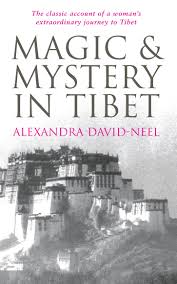
Magic and Mystery in Tibet
Highlights:
Born in 1868 to a respectable French family, Alexandra David-Neel became an occultist, anarchist and the most remarkable female travel writer of the Twentieth century. David-Neel studied at the Sorbonne at a time when women were not allowed to formally matriculate and converted to Buddhism after viewing a statue of the Buddha in the Guimet Museum. In 1911 she set off, alone, to travel around India for the second time and in 1914 she secluded herself in a cave in the Himalayas for two years, intensively studying the mysteries of Tibetan Buddhism, as well as the mystic legends that surrounded Buddhist monks. From 1918 she spent three years in a Buddhist monastery translating texts into French and English. By 1924 she had travelled to the forbidden city of Lhasa and returning to France in 1927 began to write, recording her extraordinary experiences. She died in 1969, 101 years old, still travelling, and an inspiration for a generation that included Jack Kerouac and Allen Ginsberg. Magic & Mystery in Tibet, like Seven Pillars of Wisdom, attempts to bring ancient wisdom into the modern age. David-Neel records the seemingly magic feats performed by Buddhist monks; telepathy, tumo breathing (the art of generating body heat to keep warm in freezing conditions), the ability to run for days at a time, the ability to defy gravity and the ability to become invisible. As a child David-Neel had wanted to search for the unknown and as an adult she went beyond the Western world, and into areas unexplained by Western science. No other Western writer has ever been so immersed in Tibetan culture and Buddhism, and few other books have entranced readers for seventy years.


What Is Art?
Highlights:
This profound analysis of the nature of art is the culmination of a series of essays and polemics on issues of morality, social justice, and religion. Considering and rejecting the idea that art reveals and reinvents through beauty, Tolstoy perceives the question of the nature of art to be a religious one. Ultimately, he concludes, art must be a force for good, for the progress and improvement of mankind. For more than seventy years, Penguin has been the leading publisher of classic literature in the English-speaking world. With more than 1,700 titles, Penguin Classics represents a global bookshelf of the best works throughout history and across genres and disciplines. Readers trust the series to provide authoritative texts enhanced by introductions and notes by distinguished scholars and contemporary authors, as well as up-to-date translations by award-winning translators.


Tales of a Shaman’s Apprentice
Highlights:
Adventure, anthropology, and science converge in one man’s quest among the rain forest shamans for ancient medicines that may hold the cure to today’s devastating diseases. Vividly clarifies what destruction of the region’s plant species may ultimately cost humanity.

The Naked Man: A study of the male body
Highlights:
No life form has had a greater impact on this planet than the human male. What is it that has made his legacy so utterly distinct from that of all other life forms, including even the human female? Following on from the international success of The Naked Woman, Desmond Morris investigates this intriguing evolutionary success story. The Naked Man is a study of the masculine body from head to toe, examining biological features of the male anatomy in illuminating detail, and describing the many ways in which these features have been modified, suppressed or exaggerated by local customs and changes in social fashions. This is a natural history of man, viewing him as a fascinating specimen of a far from rare, but nevertheless endangered species.
As with its companion title, The Naked Man is written from a zoologist’s perspective and packed full of scientific fact, engaging anecdote and thought-provoking conclusions, including a controversial chapter examining male sexuality.


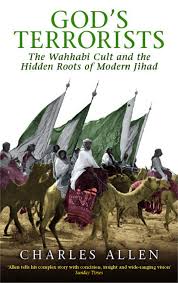
God’s Terrorists
Highlights:
The brutal assasination of Commissioner Frederick Mackeson on British India’s North-West Frontier in 1853 was a bloody and public declaration of a conflict that was to stretch well into the next one hundred and fifty years. The Wahhabi tribe, extreme Islamist fundamentalists, set out to restore purity to their faith by declaring violent jihad on all who opposed them. Their history has long been forgotten and yet their vicious brand of political ideology lives on. The Wahhabi deeply influenced not only the formation of modern Saudi Arabia, but Osama bin Laden and the Taliban. Their teachings educate orphan boys in Afghanistan and press rifles into their hands, for the sake of jihad.
The parallels between this pivotal terrorist network and our post-9/11 political climate are staggering. Charles Allen sheds lights on the historical roots of modern terrorism and shows how this dangerous nineteenth-century theology lives on today.


Alchemy & Mysticism (2 copies)
Highlights:
A fantastic journey through the history of esoteric lore
The Hermetic Museum takes readers on a magical mystery tour spanning an arc from the medieval cosmogram and images of Christian mysticism, through the fascinating world of alchemy to the art of the Romantic era. The enigmatic hieroglyphs of cabalists, Rosicrucians, and freemasons are shown to be closely linked with the early scientific illustrations in the fields of medicine, chemistry, optics, and color theory. Even for those with no knowledge of the fascinating history of alchemy, this book is a delight to explore. Each richly illustrated chapter begins with an introduction and quotes from alchemists by specialist Alexander Roob. The roots of surrealism and many other more recent artistic movements can be found in this treasure trove.
There are no reviews yet.