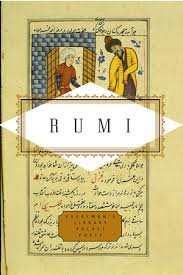
Rumi: Poems
The poetry of the medieval Persian sage Rumi combines lyrical beauty with spiritual profundity, a sense of rapture, and acute awareness of human suffering in ways that speak directly to contemporary audiences. Trained in Sufism—a mystic tradition within Islam—Rumi founded the Sufi order known to us as the Whirling Dervishes, who use dance and music as part of their spiritual devotion. Many of Rumi’s poems speak of a yearning for ecstatic union with the divine Beloved. But his images bring the sacred and the earthy together in startling ways, describing divine love in vividly human terms. This volume draws on a wide variety of translations—from the early twentieth century to the present—of Rumi’s deeply moving, sensually vibrant poetry.
Related Products
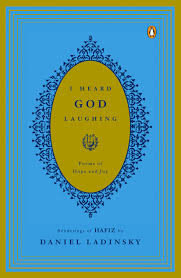
I Heard God Laughing
From bestselling poet Daniel Ladinsky, a rich collection that brings the great Sufi poet Hafiz to Western readers To Persians, the poems of Hafiz are not “classical literature” from a remote past but cherished wisdom from a dear and intimate friend that continues to be quoted in daily life. With uncanny insight, Hafiz captures the many forms and stages of love. His poetry outlines the stages of the mystic’s “path of love”—a journey in which love dissolves personal boundaries and limitations to join larger processes of growth and transformation. With this stunning collection, Ladinsky has succeeded brilliantly in capturing the essence of one of Islam’s greatest poetic and spiritual voices. “If you haven’t yet had the delight of dining with Daniel Ladinsky’s sweet, playful renderings of the musings of the great saints, I Heard God Laughing is a perfect appetizer. . . . This newly released edition of his first playful foray into Hafiz’s divinely inspired poetry is essential reading. . . . Ladinsky is a master who will be remembered for finally bringing Hafiz alive in the West.” —Alexandra Marks, The Christian Science Monitor
The Underdogs: A Novel of the Mexican Revolution
The greatest novel of the Mexican Revolution, in a brilliant new translation by an award-winning translator The Underdogs is the first great novel about the first great revolution of the twentieth century. Demetrio Macias, a poor, illiterate Indian, must join the rebels to save his family. Courageous and charismatic, he earns a generalship in Pancho Villa’s army, only to become discouraged with the cause after it becomes hopelessly factionalized. At once a spare, moving depiction of the limits of political idealism, an authentic representation of Mexico’s peasant life, and a timeless portrait of revolution, The Underdogs is an iconic novel of the Latin American experience and a powerful novel about the disillusionment of war.
Sentimental Education
‘Sentimental Education’ has been described both as the first modern novel and as a novel to end all novels. Weaving a poignant love story into his account of the 1848 revolution, Flaubert shows a society in the grip of stereotypes, on every level. There is something farcical in his depiction of characters who aspire to act but are dogged by cliche at every turn. To a greater extent even than Madame Bovary, ‘Sentimental Education’ is an indictment of modern consumerism, contrasting the hollowness of material achievement with the lasting beauty of the ideal. Flaubert’s study of success and failure offers us a terrible sadness in a terrible beauty, yet is one of the world’s great comic masterpieces. AUTHOR: Gustave Flaubert (1821-1880) achieved instant success and fame, indeed notoriety, with his first novel, ‘Madam Bovary’, published in 1857. He was prosecuted on the basis that the novel was ‘offensive to public morality and religion’. Although found not guilty, Flaubert earned a lecture from the judge on the dangers of ‘realism’. The book was a huge success, and Flaubert came to be considered one of the great novelists of Western literature.
The Quest for Meaning: Developing a Philosophy of Pluralism
In The Quest for Meaning: Developing a Philosophy of Pluralism, Tariq Ramadan embarks on a journey to uncover the profound truths that bind us together. In a world so full of different beliefs and viewpoints, how can we find peace in our shared humanity? Acclaimed thinker and philosopher Tariq Ramadan explores universal ideas such as love, respect, truth, and tolerance, and examines questions such as how can men and women relate to each other? What is the true nature of equality? What does “civilization” really mean? In doing so, he opens our minds to a new view of humanity. Whether we are Christian or Buddhist, Jewish or Muslim, secularist or believer, he reveals that all traditions of thought spring from the same place, and guides us to see past what divides us and discover the beauty of what we have in common. This book has resonance for all of us, showing why, eventually, all different spiritual paths lead to the human heart.
The Great Sea: A Human History of the Mediterranean
For over three thousand years, the Mediterranean Sea has been one of the great centres of civilization. David Abulafia’s The Great Sea is the first complete history of the Mediterranean, from the erection of temples on Malta around 3500 BC to modern tourism. Ranging across time and the whole extraordinary space of the Mediterranean from Gibraltar to Jaffa, Genoa to Tunis, and bringing to life pilgrims, pirates, sultans and naval commanders, this is the story of the sea that has shaped much of world history.


There are no reviews yet.