| Author | A. L. Basham |
|---|---|
| Publisher | Oxford University Press |
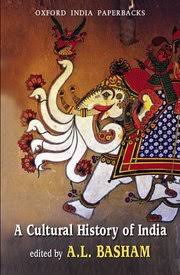
A Cultural History of India
This book, edited by the well-known historian A. L. Basham, presents a comprehensive survey of Indian culture, covering such aspects as religion, philosophy, social organization, literature, art. architecture, music and science. It includes a special section dealing with the influence of Indian civilization on the rest of the world, as well as details of the political history of the region to provide a chronological framework for the non-specialist. Contributors include such eminent scholars as Radhakrishnan, Burrow, Das, and Spear.
Be the first to review “A Cultural History of India” Cancel reply
Related Products
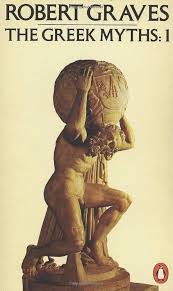
The Greek Myths (Volume 1)
Volume 1 of Robert Graves classical translation of Greek Myth is both reference and entertainment. Covering Myths 1 through 104, this Volume tells the stories of Endymion, Daedalus, Pygmalion, etc. This contains detailed cross-references and indexes.
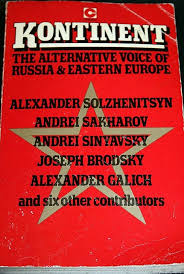
Kontinent: The Alternative Voice of Russia and Eastern Europe
During the last few years many people of great talent have been allowed to emigrate from the Soviet Union.As many of Russia’s best living writers are now living outside their own country, it was recently decided to launch a quarterly journal to which they would all contribute. This journal, KONTINENT, would open a dialogue between these writers and the literary figures in the West interested in the problems of Eastern Europe.This collection is drawn from the first two Russian volumes of KONTINENT, and includes valuable contributions from the most famous ‘stars’ of Russia’s ‘third emigration’. There is the historic controversy between Alexander Solzhenitsyn and Andrei Sakharov, winner of the Nobel Peace Prize; a memorable article by Abram Terz (Andrei Sinyavsky) on the literary process in Russia; a novella by Vladimir Maramzin; and poems by Joseph Brodsky, widely accepted as Russia’s most talented living poet, and by Alexander Galich, whose work is enjoyed in song form by millions of Russians.
the devil is an ass
The plays featured have been edited from the earliest printed texts.
Peter The Great
To Alexei Tolstoy (1883-1945) history, in addition to an artistic theme, was also a means of studying life. The novel “Peter the Great” was preceded by various works on this theme (Peters Day, On the Rack) which depict the formative stages of the authors conception of history. Tolstoy published the first part of the novel in 1929, the second in 1934, working on the third part until the day of his death, yet leaving it unfinished.The novel is dynamic. It shows the epoch and Peter himself, a true national hero of Russia and creator of the Russian state, in all their magnificence and multiplicity, in all their contradictions. The author describes the transformation of Russia into a mighty power. The novel is imbued with pride for Russia and faith in the Russian people. This profoundly realistic work has greatly influenced Soviet writers working in the field of history. Tolstoy won the Stalin Prize for this novel.
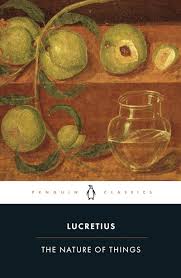
The Nature of Things
The acclaimed translation of the classic poem at the heart of Stephen Greenblatt’s The Swerve “A plague . . . tests us in unique ways. . . . Only if you can face the invisible bullets all around us, and still keep calm, remain rational, and somehow find it possible to take pleasure in life, have you learned the lesson that [The Nature of Things] set out to teach.” —Stephen Greenblatt, The New Yorker Lucretius’ poem On the Nature of Things combines a scientific and philosophical treatise with some of the greatest poetry ever written. With intense moral fervour he demonstrates to humanity that in death there is nothing to fear since the soul is mortal, and the world and everything in it is governed by the mechanical laws of nature and not by gods; and that by believing this men can live in peace of mind and happiness. He bases this on the atomic theory expounded by the Greek philosopher Epicurus, and continues with an examination of sensation, sex, cosmology, meteorology, and geology, all of these subjects made more attractive by the poetry with which he illustrates them. For more than seventy years, Penguin has been the leading publisher of classic literature in the English-speaking world. With more than 1,700 titles, Penguin Classics represents a global bookshelf of the best works throughout history and across genres and disciplines. Readers trust the series to provide authoritative texts enhanced by introductions and notes by distinguished scholars and contemporary authors, as well as up-to-date translations by award-winning translators.
Fall of Giants
This is a huge novel that follows five families through the world-shaking dramas of the First World War, the Russian Revolution, and the struggle for votes for women. It is 1911. The Coronation Day of King George V. The Williams, a Welsh coal-mining family, is linked by romance and enmity to the Fitzherberts, aristocratic coal-mine owners. Lady Maud Fitzherbert falls in love with Walter von Ulrich, a spy at the German Embassy in London. Their destiny is entangled with that of an ambitious young aide to U.S. President Woodrow Wilson and to two orphaned Russian brothers, whose plans to emigrate to America fall foul of war, conscription and revolution. In a plot of unfolding drama and intriguing complexity, “Fall of Giants” moves seamlessly from Washington to St Petersburg, from the dirt and danger of a coal mine to the glittering chandeliers of a palace, from the corridors of power to the bedrooms of the mighty.


There are no reviews yet.