


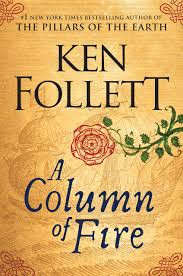
| Author | Ken Follett |
|---|---|
| Publisher | Viking |
Additional information
Reviews (0)
Be the first to review “A Column of Fire” Cancel reply
Related Products

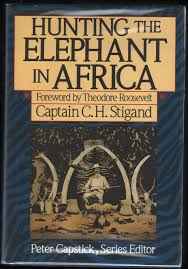
Hunting the Elephant in Africa
Highlights:
The author describes his adventures in Africa hunting for elephants, lions, buffalo, and other big-game animals
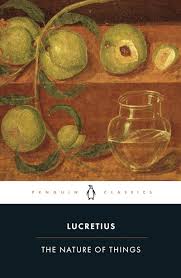
The Nature of Things
Highlights:
The acclaimed translation of the classic poem at the heart of Stephen Greenblatt’s The Swerve “A plague . . . tests us in unique ways. . . . Only if you can face the invisible bullets all around us, and still keep calm, remain rational, and somehow find it possible to take pleasure in life, have you learned the lesson that [The Nature of Things] set out to teach.” —Stephen Greenblatt, The New Yorker Lucretius’ poem On the Nature of Things combines a scientific and philosophical treatise with some of the greatest poetry ever written. With intense moral fervour he demonstrates to humanity that in death there is nothing to fear since the soul is mortal, and the world and everything in it is governed by the mechanical laws of nature and not by gods; and that by believing this men can live in peace of mind and happiness. He bases this on the atomic theory expounded by the Greek philosopher Epicurus, and continues with an examination of sensation, sex, cosmology, meteorology, and geology, all of these subjects made more attractive by the poetry with which he illustrates them. For more than seventy years, Penguin has been the leading publisher of classic literature in the English-speaking world. With more than 1,700 titles, Penguin Classics represents a global bookshelf of the best works throughout history and across genres and disciplines. Readers trust the series to provide authoritative texts enhanced by introductions and notes by distinguished scholars and contemporary authors, as well as up-to-date translations by award-winning translators.


The Secret of the Heart
Highlights:
Kahlil Gibran reveals his vision of the soul and understanding of the world—past, present, and future—in this rich sampling of more than twenty works. Prose tales, fables, and poems evoke the mystic East and form a world at once powerful, tender, joyous, and melancholy. This collection, penned when Gibran was still a young writer, reveals many of the themes and styles plumbed throughout his life, including his lifelong struggle against injustice in “The Crucified,” his heart-wrenching lament for a Lebanon shackled by tradition and politics in “My Countrymen,” and his masterful use of symbolism and simile in “The Secrets of the Heart.”
A writer with infinite abilities, Gibran continually seeks true beauty, no matter the form.

Fall of Giants
Highlights:
This is a huge novel that follows five families through the world-shaking dramas of the First World War, the Russian Revolution, and the struggle for votes for women. It is 1911. The Coronation Day of King George V. The Williams, a Welsh coal-mining family, is linked by romance and enmity to the Fitzherberts, aristocratic coal-mine owners. Lady Maud Fitzherbert falls in love with Walter von Ulrich, a spy at the German Embassy in London. Their destiny is entangled with that of an ambitious young aide to U.S. President Woodrow Wilson and to two orphaned Russian brothers, whose plans to emigrate to America fall foul of war, conscription and revolution. In a plot of unfolding drama and intriguing complexity, “Fall of Giants” moves seamlessly from Washington to St Petersburg, from the dirt and danger of a coal mine to the glittering chandeliers of a palace, from the corridors of power to the bedrooms of the mighty.
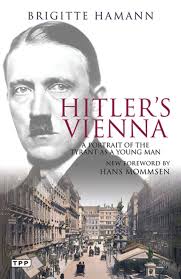
Hitler’s Vienna
Highlights:
What turned Adolf Hitler, a relatively normal and apparently unexceptional young man, into the very personification of evil? To answer this question, acclaimed historian Brigitte Hamann has turned to the critical, formative, years that the young Hitler spent in Vienna. As a failing, bitter, and desperately poor artist, Hitler experienced only the dark underbelly of Vienna, which was seething with fear, racial prejudice, anti-Semitism and conservatism. Drawing on previously untapped sources—from personal reminiscences to the records of shelters where Hitler slept—Hamann vividly recreates the dark side of fin de siècle Vienna and paints the fullest and most disturbing portrait of the young Hitler to date.
There are no reviews yet.