


| Author | Gareth Patterson |
|---|---|
| Publisher | St Martins Press |
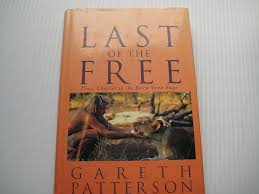
Last of the Free: Final Chapter in the Born Free Saga
Highlights:
Describes the work of George Adamson restoring lions to the wild, until his murder by poachers, and recounts the author’s efforts to return the last three lion cubs with which Adamson had been working to the wild
Please Login to view access options.
This book can only be request by members.
Additional information
Reviews (0)
Be the first to review “Last of the Free: Final Chapter in the Born Free Saga” Cancel reply
Related Products
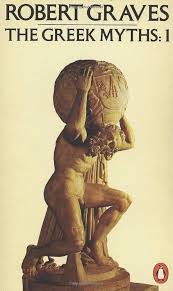
The Greek Myths (Volume 1)
Highlights:
Volume 1 of Robert Graves classical translation of Greek Myth is both reference and entertainment. Covering Myths 1 through 104, this Volume tells the stories of Endymion, Daedalus, Pygmalion, etc. This contains detailed cross-references and indexes.


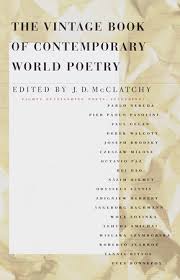
The Vintage Book of Contemporary World Poetry
Highlights:
This groundbreaking volume may well be the poetry anthology for the global village. As selected by J.D. McClatchy, this collection includes masterpieces from four continents and more than two dozen languages in translations by such distinguished poets as Elizabeth Bishop, W.S. Merwin, Ted Hughes, and Seamus Heaney. Among the countries and writers represented are: Bangladesh–Taslima Nasrin Chile–Pablo Neruda China–Bei Dao, Shu Ting El Salvador–Claribel Alegria France–Yves Bonnefoy Greece–Odysseus Elytis, Yannis Ritsos India–A.K. Ramanujan Israel–Yehuda Amichai Japan–Shuntaro Tanikawa Mexico–Octavio Paz Nicaragua–Ernesto Cardenal Nigeria–Wole Soyinka Norway–Tomas Transtromer Palestine–Mahmoud Darwish Poland–Zbigniew Herbert, Czeslaw Milosz Russia–Joseph Brodsky, Yevgeny Yevtushenko Senegal–Leopold Sedar Senghor South Africa–Breyten Breytenbach St. Lucia, West Indies–Derek Walcott

The Secret of the Heart
Highlights:
Kahlil Gibran reveals his vision of the soul and understanding of the world—past, present, and future—in this rich sampling of more than twenty works. Prose tales, fables, and poems evoke the mystic East and form a world at once powerful, tender, joyous, and melancholy. This collection, penned when Gibran was still a young writer, reveals many of the themes and styles plumbed throughout his life, including his lifelong struggle against injustice in “The Crucified,” his heart-wrenching lament for a Lebanon shackled by tradition and politics in “My Countrymen,” and his masterful use of symbolism and simile in “The Secrets of the Heart.”
A writer with infinite abilities, Gibran continually seeks true beauty, no matter the form.
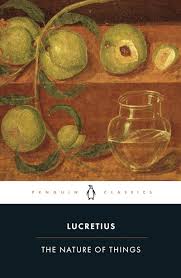
The Nature of Things
Highlights:
The acclaimed translation of the classic poem at the heart of Stephen Greenblatt’s The Swerve “A plague . . . tests us in unique ways. . . . Only if you can face the invisible bullets all around us, and still keep calm, remain rational, and somehow find it possible to take pleasure in life, have you learned the lesson that [The Nature of Things] set out to teach.” —Stephen Greenblatt, The New Yorker Lucretius’ poem On the Nature of Things combines a scientific and philosophical treatise with some of the greatest poetry ever written. With intense moral fervour he demonstrates to humanity that in death there is nothing to fear since the soul is mortal, and the world and everything in it is governed by the mechanical laws of nature and not by gods; and that by believing this men can live in peace of mind and happiness. He bases this on the atomic theory expounded by the Greek philosopher Epicurus, and continues with an examination of sensation, sex, cosmology, meteorology, and geology, all of these subjects made more attractive by the poetry with which he illustrates them. For more than seventy years, Penguin has been the leading publisher of classic literature in the English-speaking world. With more than 1,700 titles, Penguin Classics represents a global bookshelf of the best works throughout history and across genres and disciplines. Readers trust the series to provide authoritative texts enhanced by introductions and notes by distinguished scholars and contemporary authors, as well as up-to-date translations by award-winning translators.
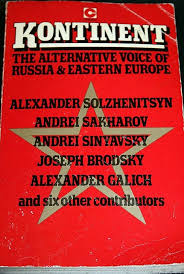
Kontinent: The Alternative Voice of Russia and Eastern Europe
Highlights:
During the last few years many people of great talent have been allowed to emigrate from the Soviet Union.As many of Russia’s best living writers are now living outside their own country, it was recently decided to launch a quarterly journal to which they would all contribute. This journal, KONTINENT, would open a dialogue between these writers and the literary figures in the West interested in the problems of Eastern Europe.This collection is drawn from the first two Russian volumes of KONTINENT, and includes valuable contributions from the most famous ‘stars’ of Russia’s ‘third emigration’. There is the historic controversy between Alexander Solzhenitsyn and Andrei Sakharov, winner of the Nobel Peace Prize; a memorable article by Abram Terz (Andrei Sinyavsky) on the literary process in Russia; a novella by Vladimir Maramzin; and poems by Joseph Brodsky, widely accepted as Russia’s most talented living poet, and by Alexander Galich, whose work is enjoyed in song form by millions of Russians.
There are no reviews yet.