







Shopping cart is empty!
Home
Showing 961–972 Products of 11194 Products
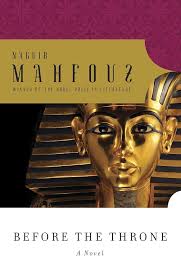
Before the Throne
Highlights:
Nearly sixty of Egypt’s past leaders—from the time of the Pharoahs to the twentieth century—are summoned to judgment in the Court of Osiris in the Afterlife, in this extraordinary novel by Nobel Prize–winning author Naguib Mahfouz.
Before the Throne calls forth a parade of those who have shaped the modern nation of Egypt—from the ruler who first unified Egypt in 3000 BC to Anwar Sadat, the president assassinated by religious extremists in 1981, and including figures as various as the famous pharaoh Ramesses II and the medieval vizier Qaraqush. As they defend their decisions under questioning by Osiris, Isis, and Horus, those who acted for the nation’s good are honored with immortality in paradise while those who failed to protect it are condemned either to the inferno or to “the place of insignificance.” Full of Mahfouz’s unique insight into his country’s timeless qualities, this provocative work skillfully traces five thousand years of Egypt’s past as it flows into the turbulent present.
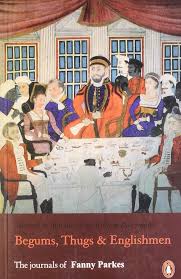
Begums, Thugs and Englishmen
Highlights:
Fanny Parkes, Who Lived In India Between 1822 And 1846, Was The Ideal Travel Writer Courageous, Indefatigably Curious And Determinedly Independent. Her Delightful Journal Traces Her Journey From Prim Memsahib, Married To A Minor Civil Servant Of The Raj, To Eccentric Sitar-Playing Indophile, Fluent In Urdu, Critical Of British Rule And Passionate In Her Appreciation Of Indian Culture. Fanny Is Fascinated By Everything, From The Trial Of The Thugs And The Efficacy Of Opium On Headaches To The Adorning Of A Hindu Bride. To Read Her Is To Get As Close As One Can To A True Picture Of Early Colonial India The Sacred And The Profane, The Violent And The Beautiful, The Straight-Laced Sahibs And The More Eccentric White Mughals Who Fell In Love With India And Did Their Best, Like Fanny, To Build Bridges Across Cultures.

Bel-Ami
Highlights:
Guy de Maupassant’s scandalous tale of an opportunistic young man corrupted by the allure of power, Bel-Ami is translated with an introduction by Douglas Parmée in Penguin Classics.
Young, attractive and very ambitious, George Duroy, known to his admirers as Bel-Ami, is offered a job as a journalist on La Vie francaise and soon makes a great success of his new career. But he also comes face to face with the realities of the corrupt society in which he lives – the sleazy colleagues, the manipulative mistresses and wily financiers – and swiftly learns to become an arch-seducer, blackmailer and social climber in a world where love is only a means to an end. Written when Maupassant was at the height of his powers, Bel-Ami is a novel of great frankness and cynicism, but it is also infused with the sheer joy of life – depicting the scenes and characters of Paris in the belle epoque with wit, sensitivity and humanity.
Douglas Parmée’s translation captures all the vigour and vitality of Maupassant’s novel. His introduction explores the similarities between Bel-Ami and Maupassant himself and demonstrates the skill with which the author depicts his large cast of characters and the French society of the Third Republic.
Guy de Maupassant (1850-1893) was born in Normandy. By the late 1870s, the first signs of syphilis had appeared, and Maupassant had become Flaubert’s pupil in the art of prose. He led a hectic social life, and in 1891, having tried to commit suicide, he was committed to an asylum in Paris, where he died two years later.