


Shopping cart is empty!
Home
Showing 8497–8508 Products of 11194 Products
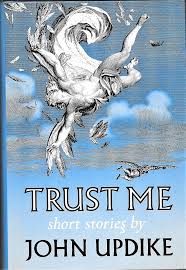
Trust Me
Highlights:
The theme of trust, betrayed or fulfilled, runs through this collection of short stories: Parents lead children into peril, husbands abandon wives, wives manipulate husbands, and time undermines all. Love pangs, a favorite subject of the author, take on a new urgency as earthquakes, illnesses, lost wallets, and deaths of distant friends besiege his aging heroes and heroines. One man loves his wifes twin, and several men love the imagined bliss of their pasts; one woman takes an impotent lover, and another must administer her fathers death. Bourgeois comforts and youthful convictions are tenderly seen as certain to erode: Man, as one of these stories concludes, was not meant to abide in paradise.
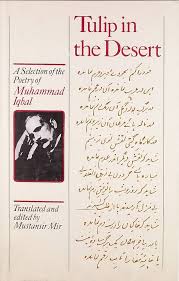
Tulip In The Desert: A Selection Of The Poetry of Muhammad Iqbal
Highlights:
Muhammad Iqbal (1877 1938) is one of the pre-eminent writers of the Indian subcontinent and the attention he has received from writers, translators and critics in western as well as Islamic countries testifies to his stature as a world literary figure. In his translation of Iqbal s poetry, Mustansir Mir seeks to convey every level of meaning and mood in the poems, while making the text as readable and idiomatic as possible.

Turks in the Indian Subcontinent, Central and West Asia: The Turkish Presence in the Islamic World
Highlights:
For almost a millennium until the beginning of the twentieth century, Turkish rulers and military commanders controlled vast stretches of Islamic lands. While these rulers dominated lands far and wide-from Algeria in the west to Bengal in the east, reaching up to the Volga region in the north and Yemen in the south-Turkish scholars, theologians, jurists, poets, and other literary figures significantly influenced the Islamic world and its culture.
Highlighting the political and cultural history of the Turks-not only within the context of the Indian subcontinent, where they laid the foundation of one of the world’s biggest empires in the form of the Mughal Empire, but also within the context of Central and West Asia-this outstanding work of collective scholarship moves beyond conventional frames of reference and reassesses the contribution of Turks in the shaping of the Islamic world and its civilization.
With contributions from some of the most noted scholars on Islamic history, the essays in this volume throw light on neglected themes such as the cultural changes among the Turks and their emergence in the Islamic world; their contributions in the fields of cartography and geography; Seljuq architecture and educational system; and the rise of the Safavids and the role of the Turks in the success of their military campaigns.

Turning Plants Into Medicines: Novel Approaches
Highlights:
The objectives of the book is to highlight the relevance of traditional medicine and way towards ethnopharmacology, to share research achievements and innovations in herbal science, to evaluate and review opportunities for advancing herbal drug research in the region, to provide a platform to map an agenda for the development of phytomedicine, to address issues concerning conservation of medicinal plants. The book has been compiled with 30 articles based on the original research work by eminent academicians and scientists of the country on different areas of phytomedicine. Recent trends and techniques involved from the search, documentation, processing, sustainable utilization and conservation of medicinal plants are the highlights of this book. It will provide a unique opportunity to boost up the knowledge in various aspects of medicinal plant research.
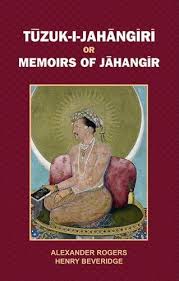
Tuzuk-I-Jahangiri or Memoirs of Jahangir
Highlights:
Emperor Nur-ud-din Jahangir hails from the illustrious Babur family. The memoir-writing trend descended to Babur down from his great ancestor, Amir Timur. Inspite of his varied preoccupations in battles and other political knottings, Babur had well afforded to roll out his memories which outline more vividly as compared to that of his ancestors.
Jahangir kept up to the scene as the ‘Ruling Soul’ for a long duration of twenty-two years. The incentive of carrying on his memories ended in the seventeenth year of his rule for break down in his health after which they were continued by Mu’tamad Khan till the nineteenth year of Jahangir’s power, under his pseudo name. The memories were conclusively written out in the narrative of Iqbal-Nama of which Mu’tamad Khan was the distinguished author.
The present Tuzuk-I-Jahangiri or Memories of Jahangir give a lively picture of India in the early decades of the seventeenth century, and are a valuable supplement to the Akbarnama and other such writings of the time.
Preface
MR. ROGERS translated the Memoirs of Jahangir several years ago from the edition which Sayyid Ahmad printed at Ghazipur in 1863 and at Allyghur in 1864. Orientalists are greatly indebted to the Sayyid for his disinterested labours, but his text seems to have been made from a single and defective MS, and is often incorrect, especially in the case of proper names. I have collated it with the excellent MSS. in the India Office and the British Museum, and have thus been able to make numerous corrections. I have also consulted the MS. in the Library of the R.A.S., but it is not a good one. I have, with Mr. Rogers’s permission, revised the translation, and I have added m