


Shopping cart is empty!
Home
Showing 8329–8340 Products of 11194 Products
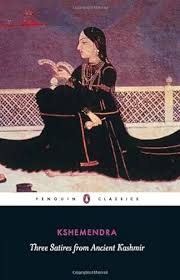
Three Satires from Ancient Kashmir
Highlights:
Corruption in government, hypocrisy in religion, avaricious greed in business: these are some of the targets of Kshemendra s one-thousand-year-old satires. So are superstition and sexual obsession, anomalies in education and a host of other ills of the time. Written by a celebrated name in classical Sanskrit literature, these little known expos茅s of fourteenth-century society find resonance in the Indian subcontinent even today.
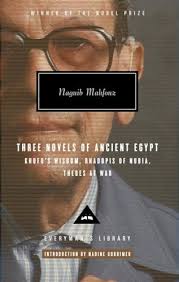
Three Novels of Ancient Egypt: Khufu’s Wisdom, Rhadopis of Nubia, Thebes at War
Highlights:
From Nobel laureate Naguib Mahfouz: the three magnificent novels—published in an omnibus edition for the first time—that form an ancient-Egyptian counterpart to his famous Cairo Trilogy.
Mahfouz reaches back thousands of years to bring us tales from his homeland’s majestic early history—tales of the Egyptian nobility and of war, star-crossed love, and the divine rule of the pharoahs. In Khufu’s Wisdom, the legendary Fourth Dynasty monarch faces the prospect of the end of his rule and the possibility that his daughter has fallen in love with the man prophesied to be his successor. Rhadopis of Nubia is the unforgettable story of the charismatic young Pharoah Merenra II and the ravishing courtesan Rhadopis, whose love affair makes them the envy of all Egyptian society. And Thebes at War tells the epic story of Egypt’s victory over the Asiatic foreigners who dominated the country for two centuries.
Three Novels of Ancient Egypt gives us a dazzling tapestry of ancient Egypt and reminds us of the remarkable artistry of Naguib Mahfouz.

Through the Dark Continent, Or, The Sources of the Nile Around the Great Lakes of Equatorial Africa and Down the Livingstone River to the Atlantic Ocean
Highlights:
Perhaps best known as the intrepid adventurer who located the missing explorer David Livingstone in equatorial Africa in 1871, Henry Morton Stanley (1841-1904) played a major role in assembling the fragmented discoveries and uncertain geographical knowledge of central Africa into a coherent picture. He was the first European to explore the Congo River; assisted at the founding of the Congo Free State, and helped pave the way for the opening up of modern Africa.
In this classic account of one of his most important expeditions, the venerable Victorian recounts the incredibly difficult and perilous journey during which he explored the great lakes of Central Africa, confirming their size and position, searched for the sources of the Nile, and traced the unknown Congo River from the depths of the continent to the sea. Accompanied by three Englishmen and a crew of Africans, Stanley left Zanzibar in 1874. He traveled to Lake Victoria, which he circumnavigated in his boat, the Lady Alice. Almost immediately, illness, malnutrition and conflicts with native tribes began to decimate his followers. Nevertheless, the explorer pushed on, also circumnavigating Lake Tanganyika, which he determined to be unconnected with the Nile system. Finally in 1876, Stanley was ready to undertake “the grandest task of all” — exploring the Livingstone (Congo) River. He sailed down the vast waterway to the lake he called Stanley Pool, then on to a series of 32 cataracts he named Livingstone Falls. Unable to go further by boat, Stanley continued overland, reaching the Atlantic Ocean on August 12, 1877. Mishaps, hostile tribes, and disease had killed his three white companions and half the Africans, but Stanley had attained his objective.
His tremendous perseverance (his persistence led his men to nickname him Bula Matari — “the rock breaker”) was complemented by Stanley’s abilities as a keen observer and accomplished prose stylist. These talents are fully evident in this exciting narrative. It offers not only the action and adventure of a life-and-death struggle to survive in the African wilderness, but detailed descriptions of native peoples, customs, and culture; the flora and fauna of central Africa; and a wealth of geographical, ecological, and other information. Supplemented with 149 black-and-white illustrations and a foldout map, this monumental narrative will be welcomed by anyone interested in the European exploration of central Africa during the nineteenth century, the exploits of one of the great explorers of all time, and a breathtaking story of human endurance and achievement in the face of immense odds.