

Shopping cart is empty!
Home
Showing 8257–8268 Products of 11194 Products
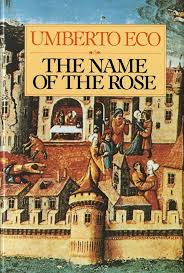
The Name of the Rose
Highlights:
The year is 1327. Franciscans in a wealthy Italian abbey are suspected of heresy, and Brother William of Baskerville arrives to investigate. When his delicate mission is suddenly overshadowed by seven bizarre deaths, Brother William turns detective. He collects evidence, deciphers secret symbols and coded manuscripts, and digs into the eerie labyrinth of the abbey where extraordinary things are happening under the cover of night. A spectacular popular and critical success, “The Name of the Rose” is not only a narrative of a murder investigation but an astonishing chronicle of the Middle Ages.
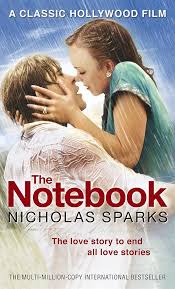
The Notebook
Highlights:
A man with a faded, well-worn notebook open in his lap. A woman experiencing a morning ritual she doesn’t understand. Until he begins to read to her. The Notebook is an achingly tender story about the enduring power of love, a story of miracles that will stay with you forever.
Set amid the austere beauty of coastal North Carolina in 1946, The Notebook begins with the story of Noah Calhoun, a rural Southerner returned home from World War II. Noah, thirty-one, is restoring a plantation home to its former glory, and he is haunted by images of the beautiful girl he met fourteen years earlier, a girl he loved like no other. Unable to find her, yet unwilling to forget the summer they spent together, Noah is content to live with only memories…until she unexpectedly returns to his town to see him once again.
Allie Nelson, twenty-nine, is now engaged to another man, but realizes that the original passion she felt for Noah has not dimmed with the passage of time. Still, the obstacles that once ended their previous relationship remain, and the gulf between their worlds is too vast to ignore. With her impending marriage only weeks away, Allie is forced to confront her hopes and dreams for the future, a future that only she can shape.
Like a puzzle within a puzzle, the story of Noah and Allie is just the beginning. As it unfolds, their tale miraculously becomes something different, with much higher stakes. The result is a deeply moving portrait of love itself, the tender moments and the fundamental changes that affect us all. Shining with a beauty that is rarely found in current literature, The Notebook establishes Nicholas Sparks as a classic storyteller with a unique insight into the only emotion that really matters.
“I am nothing special, of this I am sure. I am a common man with common thoughts and I’ve led a common life. There are no monuments dedicated to me and my name will soon be forgotten, but I’ve loved another with all my heart and soul, and to me, this has always been enough.”
And so begins one of the most poignant and compelling love stories you will ever read…The Notebook

The Origins of Political Order
Highlights:
Nations are not trapped by their pasts, but events that happened hundreds or even thousands of years ago continue to exert huge influence on present-day politics. If we are to understand the politics that we now take for granted, we need to understand its origins.
Francis Fukuyama examines the paths that different societies have taken to reach their current forms of political order. This book starts with the very beginning of mankind and comes right up to the eve of the French and American revolutions, spanning such diverse disciplines as economics, anthropology and geography. The Origins of Political Order is a magisterial study on the emergence of mankind as a political animal, by one of the most eminent political thinkers writing today.
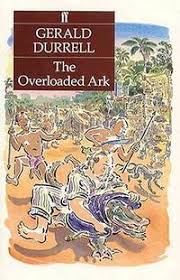
The Overloaded Ark
Highlights:
Mr. Durrell is an animal collector and this account of an expedition he made to west Africa, is ‘written with both a sense of the burning African colours and a pen capable of translating them into polychromatic black and white… I can think of no more wholesomely escapist experience than travelling for an all-too-brief spell in Mr durrell’s overloaded ark’ _( Daily Telegraph) _ ‘I want to try convey how much enjoyment recieved from this book… it has certainly given me a much deeper understanding of the motives and pleasures of men who live this kind of life,’ wrote _ Truth. _
This is not only an exciting book, it is also highly amusing, by a man ‘who really can write’ and illustrated, brilliantly, by Sabine Bauer.

The Periodic Table
Highlights:
The Periodic Table is largely a memoir of the years before and after Primo Levi’s transportation from his native Italy to Auschwitz as an anti-Facist partisan and a Jew.
It recounts, in clear, precise, unfailingly beautiful prose, the story of the Piedmontese Jewish community from which Levi came, of his years as a student and young chemist at the inception of the Second World War, and of his investigations into the nature of the material world. As such, it provides crucial links and backgrounds, both personal and intellectual, in the tremendous project of remembrance that is Levi’s gift to posterity. But far from being a prologue to his experience of the Holocaust, Levi’s masterpiece represents his most impassioned response to the events that engulfed him.
The Periodic Table celebrates the pleasures of love and friendship and the search for meaning, and stands as a monument to those things in us that are capable of resisting and enduring in the face of tyranny.
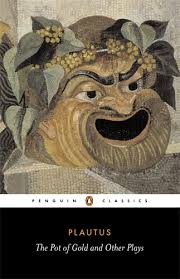
The Pot of Gold and Other Plays
Highlights:
One of the supreme comic writers of the Roman world, Plautus (c.254-184 BC), skilfully adapted classic Greek comic models to the manners and customs of his day. This collection features a varied selection of his finest plays, from the light-hearted comedy Pseudolus, in which the lovesick Calidorus and his slave try to liberate his lover from her pimp, to the more subversive The Prisoners, which raises serious questions about the role of slavery. Also included are The Brothers Menaechmus, which formed the prototype for Shakespeare’s The Comedy of Errors, and The Pot of Gold, whose old miser Euclio is a glorious study in avarice. Throughout, Plautus breathes new, brilliant life into classic comic types – including deceitful twins, scheming slaves, bitter old men and swaggering soldiers – creating an entertaining critique of Roman life and values.
The Remains of the Day
Highlights:
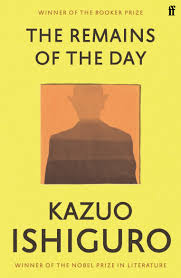
It is the summer of 1956, and the ageing butler of Darlington Hall takes a rare holiday. But it is a journey that will also take him deep into his past. The Remains of the Day is a remarkable story: a man’s exploration of his own life, and his heart-breaking attempt to make sense of it.

The Rise of the Roman Empire
Highlights:
The Greek statesman Polybius (c.200–118 BC) wrote his account of the relentless growth of the Roman Empire in order to help his fellow countrymen understand how their world came to be dominated by Rome. Opening with the Punic War in 264 BC, he vividly records the critical stages of Roman expansion: its campaigns throughout the Mediterranean, the temporary setbacks inflicted by Hannibal and the final destruction of Carthage. An active participant of the politics of his time as well as a friend of many prominent Roman citizens, Polybius drew on many eyewitness accounts in writing this cornerstone work of history.
The Room Where It Happened
Highlights:
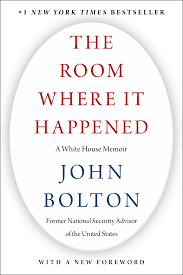
As President Trump’s National Security Advisor, John Bolton spent many of his 453 days in the room where it happened, and the facts speak for themselves.
The result is a White House memoir that is the most comprehensive and substantial account of the Trump Administration, and one of the few to date by a top-level official. With almost daily access to the President, John Bolton has produced a precise rendering of his days in and around the Oval Office. What Bolton saw astonished him: a President for whom getting reelected was the only thing that mattered, even if it meant endangering or weakening the nation. “I am hard-pressed to identify any significant Trump decision during my tenure that wasn’t driven by reelection calculations,” he writes. In fact, he argues that the House committed impeachment malpractice by keeping their prosecution focused narrowly on Ukraine when Trump’s Ukraine-like transgressions existed across the full range of his foreign policy-and Bolton documents exactly what those were, and attempts by him and others in the Administration to raise alarms about them.
He shows a President addicted to chaos, who embraced our enemies and spurned our friends, and was deeply suspicious of his own government. In Bolton’s telling, all this helped put Trump on the bizarre road to impeachment. “The differences between this presidency and previous ones I had served were stunning,” writes Bolton, who worked for Reagan, Bush 41, and Bush 43. He discovered a President who thought foreign policy is like closing a real estate deal-about personal relationships, made-for-TV showmanship, and advancing his own interests. As a result, the US lost an opportunity to confront its deepening threats, and in cases like China, Russia, Iran, and North Korea ended up in a more vulnerable place.
Bolton’s account starts with his long march to the West Wing as Trump and others woo him for the National Security job. The minute he lands, he has to deal with Syria’s chemical attack on the city of Douma, and the crises after that never stop. As he writes in the opening pages, “If you don’t like turmoil, uncertainty, and risk-all the while being constantly overwhelmed with information, decisions to be made, and sheer amount of work-and enlivened by international and domestic personality and ego conflicts beyond description, try something else.”
The turmoil, conflicts, and egos are all there-from the upheaval in Venezuela, to the erratic and manipulative moves of North Korea’s Kim Jong Un, to the showdowns at the G7 summits, the calculated warmongering by Iran, the crazy plan to bring the Taliban to Camp David, and the placating of an authoritarian China that ultimately exposed the world to its lethal lies. But this seasoned public servant also has a great eye for the Washington inside game, and his story is full of wit and wry humor about how he saw it played.

The Satanic Verses
Highlights:
Just before dawn one winter’s morning, a hijacked jetliner explodes above the English Channel. Through the falling debris, two figures, Gibreel Farishta, the biggest star in India, and Saladin Chamcha, an expatriate returning from his first visit to Bombay in fifteen years, plummet from the sky, washing up on the snow-covered sands of an English beach, and proceed through a series of metamorphoses, dreams and revelations.
The Satanic Verses is a wonderfully erudite study of the evil and good entwined within the hearts of women and men, an epic journey of tears and laughter, served up by a writer at the height of his powers.
The Secret Pilgrim
Highlights:
The Berlin Wall is toppled, the Iron Curtain swept aside . . . John le Carre has seized this impossible turning point in history to give the most visceral experience yet of the brilliant and base, delicate and brutal world of spydom.
The Sickness
Highlights:
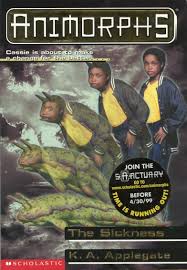
The Animorphs’ alien friend Ax is in trouble. He’s come down with a virus called “yamphut”, and it’s making him very sick. The Animorphs discover the virus could be deadly–but they can’t take an “alien” to the hospital. They need to come up with a plan–or lose their friend forever.