

Shopping cart is empty!
Home
Showing 8197–8208 Products of 11194 Products
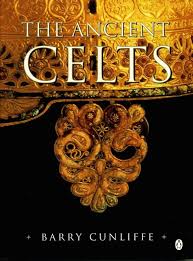
The Ancient Celts
Highlights:
The archetypal `barbarians from the north’, the Celts were feared for their ferocity in battle and admired as skilled craftsmen. For two and half thousand years the Celts have continued to fascinate all who have come into contact with them. THE ANCIENT CELTS presents an absorbing account of the tribes whose origins and identity still provoke heated debate. Exploring the archaeological reality of the Iron Age inhabitants of barbarian Europe, Professor Cunliffe traces the emergence of chiefdoms,patterns of expansion and migration, and the development of Celtic ethnicity and identity.
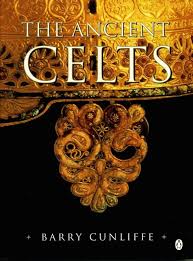
The Ancient Celts
Highlights:
The archetypal `barbarians from the north’, the Celts were feared for their ferocity in battle and admired as skilled craftsmen. For two and half thousand years the Celts have continued to fascinate all who have come into contact with them. THE ANCIENT CELTS presents an absorbing account of the tribes whose origins and identity still provoke heated debate. Exploring the archaeological reality of the Iron Age inhabitants of barbarian Europe, Professor Cunliffe traces the emergence of chiefdoms,patterns of expansion and migration, and the development of Celtic ethnicity and identity.

The Aquitaine Progression
Highlights:
In Geneva, American lawyer Joel Converse meets a man he hasn’t seen in twenty years, a covert operative who dies violently at his feet, whispering words that hand Converse a staggering legacy of death: “The generals . . . they’re back . . . Aquitaine!” Suddenly Converse is running for his life, alone with the world’s most shattering secret. Pursued by anonymous executioners to the dark corners of Europe, he is forced to play a game of survival by blood rules he thought he’d long left behind. One by one, he traces each thread of a lethal progression to the heart of every major government, a network of coordinated global violence that no one believes possible—no one but Converse and the woman he once loved and lost, the only two people on earth who can wrest the world from the iron grasp of Aquitaine.

The Arabs: A History
Highlights:
Now fully updated to cover the Arab Spring, Eugene Rogan has written an authoritative new history of the Arabs in the modern world. Starting with the Ottoman conquests in the sixteenth century, this landmark book follows the story of the Arabs through the era of European imperialism and the Superpower rivalries of the Cold War, to the present age of unipolar American power. Drawing on the writings and eyewitness accounts of those who lived through the tumultuous years of Arab history, “The Arabs” balances different voices – politicians, intellectuals, students, men and women, poets and novelists, famous, infamous and the completely unknown – to give a rich, complex sense of life over nearly five centuries. Rogan’s book is remarkable for its geographical sweep, covering the Arab world from North Africa through the Arabian Peninsula, and for the depth in which it explores every facet of modern Arab history. Charting the evolution of Arab identity from Ottomanism to Arabism to Islamism, it covers themes including the conflict between national independence and foreign domination, the Arab-Israeli struggle and the peace process, Abdel Nasser and the rise of Arab Nationalism, the political and economic power of oil and the conflict between secular and Islamic values. This multilayered, fascinating and definitive work is the essential guide to understanding the history of the modern Arab world – and its future.

The Audacity of Hope
Highlights:
In July 2004, Barack Obama electrified the Democratic National Convention with an address that spoke to Americans across the political spectrum. One phrase in particular anchored itself in listeners’ minds, a reminder that for all the discord and struggle to be found in our history as a nation, we have always been guided by a dogged optimism in the future, or what Obama called “the audacity of hope.”
The Audacity of Hope is Barack Obama’s call for a different brand of politics—a politics for those weary of bitter partisanship and alienated by the “endless clash of armies” we see in congress and on the campaign trail; a politics rooted in the faith, inclusiveness, and nobility of spirit at the heart of “our improbable experiment in democracy.” He explores those forces—from the fear of losing to the perpetual need to raise money to the power of the media—that can stifle even the best-intentioned politician. He also writes, with surprising intimacy and self-deprecating humor, about settling in as a senator, seeking to balance the demands of public service and family life, and his own deepening religious commitment.
At the heart of this book is Barack Obama’s vision of how we can move beyond our divisions to tackle concrete problems. He examines the growing economic insecurity of American families, the racial and religious tensions within the body politic, and the transnational threats—from terrorism to pandemic—that gather beyond our shores. And he grapples with the role that faith plays in a democracy—where it is vital and where it must never intrude. Underlying his stories about family, friends, and members of the Senate is a vigorous search for connection: the foundation for a radically hopeful political consensus.
A public servant and a lawyer, a professor and a father, a Christian and a skeptic, and above all a student of history and human nature, Barack Obama has written a book of transforming power. Only by returning to the principles that gave birth to our Constitution, he says, can Americans repair a political process that is broken, and restore to working order a government that has fallen dangerously out of touch with millions of ordinary Americans. Those Americans are out there, he writes—“waiting for Republicans and Democrats to catch up with them.”

The Bastard of Istanbul
Highlights:
‘Wonderfully magical, incredible, breathtaking… will have you gasping with disbelief in the last few pages’
_Sunday Express_
One rainy afternoon in Istanbul, a woman walks into a doctor’s surgery. ‘I need to have an abortion,’ she announces. She is nineteen years old and unmarried. What happens that afternoon will change her life.
Twenty years later, Asya Kazancı lives with her extended family in Istanbul. Due to a mysterious family curse, all the Kazancı men die in their early forties, so it is a house of women, among them Asya’s beautiful, rebellious mother, Zeliha, who runs a tattoo parlour; Banu who has newly discovered herself as a clairvoyant; and Feride, a hypochondriac obsessed with impending disaster. And when Asya’s Armenian-American cousin Armanoush comes to stay, long-hidden family secrets connected with Turkey’s turbulent past begin to emerge.

The Book of Indian Animals
Highlights:
This is the third edition of the standard reference work on India’s more common mammals. Based on the observations of the naturalists and sportsmen who have contributed to the journal of the Bombay Natural History Society for over a century, the book describes and illustrates the habitat, characteristics, distribution, and other details of twenty-three different types of mammal. The comprehensive illustrations include 28 full colour plates depicting 141 species, by the distinguished artist M. Paul Barruel. There are also 40 black-and-white plates, and a 2-page colour map of India showing climatic forest types and the distribution of geographical races of the Indian Giant Squirrel. This is a book for anyone interested in Indian animals, at whatever level.

The Book of Symbols: Reflections on Archetypal Images
Highlights:
Reflections on symbols and symbolic imagery
The Book of Symbols combines original and incisive essays about particular symbols with representative images from all parts of the world and all eras of history.The Book of Symbols combines original and incisive essays about particular symbols with representative images from all parts of the world and all eras of history. The highly readable texts and almost 800 beautiful full-color images come together in a unique way to convey hidden dimensions of meaning. Each of the c. 350 essays examines a given symbol’s psychic background, and how it evokes psychic processes and dynamics. Etymological roots, the play of opposites, paradox and shadow, the ways in which diverse cultures have engaged a symbolic image—all these factors are taken into consideration.
Authored by writers from the fields of psychology, religion, art, literature and comparative myth, the essays flow into each other in ways that mirror the psyche’s unexpected convergences. There are no pat definitions of the kind
that tend to collapse a symbol; a still vital symbol remains partially unknown, compels our attention and unfolds in new meanings and manifestations over time. Rather than merely categorize, The Book of Symbols illuminates how to move from the visual experience of a symbolic image in art, religion, life, or dreams, to directly experiencing its personal and psychological resonance.
The Book of Symbols sets new standards for thoughtful exploration of symbols and their meanings, and will appeal to a wide range of readers: artists, designers, dreamers and dream interpreters, psychotherapists, self-helpers, gamers, comic book readers, religious and spiritual searchers, writers, students, and anyone curious about the power of archetypal images.

The Buried Giant
Highlights:
The Romans have long since departed and Britain is steadily declining into ruin. But, at least, the wars that once ravaged the country have ceased. Axl and Beatrice, a couple of elderly Britons, decide that now is the time, finally, for them to set off across this troubled land of mist and rain to find the son they have not seen for years, the son they can scarcely remember. They know they will face many hazards—some strange and otherworldly—but they cannot foresee how their journey will reveal to them the dark and forgotten corners of their love for each other. Nor can they foresee that they will be joined on their journey by a Saxon warrior, his orphan charge, and a knight—each of them, like Axl and Beatrice, lost in some way to his own past, but drawn inexorably toward the comfort, and the burden, of the fullness of a life’s memories.
Sometimes savage, sometimes mysterious, always intensely moving, Kazuo Ishiguro’s first novel in a decade tells a luminous story about the act of forgetting and the power of memory, a resonant tale of love, vengeance, and war.

The Cairo Trilogy
Highlights:
Naguib Mahfouz’s magnificent epic trilogy of colonial Egypt appears here in one volume for the first time. The Nobel Prize—winning writer’s masterwork is the engrossing story of a Muslim family in Cairo during Britain’s occupation of Egypt in the early decades of the twentieth century.
The novels of The Cairo Trilogy trace three generations of the family of tyrannical patriarch Al-Sayyid Ahmad Abd al-Jawad, who rules his household with a strict hand while living a secret life of self-indulgence. Palace Walk introduces us to his gentle, oppressed wife, Amina, his cloistered daughters, Aisha and Khadija, and his three sons–the tragic and idealistic Fahmy, the dissolute hedonist Yasin, and the soul-searching intellectual Kamal. Al-Sayyid Ahmad’s rebellious children struggle to move beyond his domination in Palace of Desire, as the world around them opens to the currents of modernity and political and domestic turmoil brought by the 1920s. Sugar Street brings Mahfouz’s vivid tapestry of an evolving Egypt to a dramatic climax as the aging patriarch sees one grandson become a Communist, one a Muslim fundamentalist, and one the lover of a powerful politician.
Throughout the trilogy, the family’s trials mirror those of their turbulent country during the years spanning the two World Wars, as change comes to a society that has resisted it for centuries. Filled with compelling drama, earthy humor, and remarkable insight, The Cairo Trilogy is the achievement of a master storyteller.

The Canterbury Tales
Highlights:
The Canterbury Tales,compiled in the late fourteenth century,is an incisive portrait,infused with Chaucer’s wry wit and vibrant,poetical language.He evokes a spectrum of colourful characters,from the bawdy Wife of Bath to the gallant Knight,the fastidious Prioress and the burly,drunken Miller.As they wend their way from Southwark to Canterbury,tales are told to pass the time,and the stories are as diverse as the narrators,encompassing themes such as adultery,revenge,courtly love,lechery and avarice.

The Cash Nexus
Highlights:
Modern history shows that a nation’s success largely depends on the way it manages its money. In times of war, finance has been just as crucial to victory as firepower. But where do money adn politics meet? Starting in 1700 and ending at the present day, Niall Ferguson offers a bold and dazzling analysis of the evolution of today’s economic and political landscape. Far from being driven by the profit motive alone, our recent history, as Ferguson makes brilliantly clear, has also been made by potent and often conflicting human impulses – sex, violence and the desire for power.