







Shopping cart is empty!
Home
Showing 7549–7560 Products of 11194 Products

The Political Economy of Growth
Highlights:
This classic of contemporary Marxist economics provocatively tackles a problem crucial to all economists and social scientists – the conditions for economic progress. How, in short, does a society generate and utilize its economic surplus? From this viewpoint Professor Baran, one of the authors of Monopoly Capital, analyses the economic development of both advanced and developing countries and shows that neither can be understood unless their global interdependence is taken into account. Economic development has always entailed big changes in the social and political structure of society and Professor Baran explains the present turmoil in the world as the necessary accompaniment of processes as radical as the transition from feudalism to capitalism.
“I think there are few works of recent Marxist economics from which students can learn so well.”
— Professor Eric Hobsbawm
“This kind of scholarship and intelligence demands courage.”
—Herbert Marcuse
“I believe it is not necessary to give evidence of the admiration I felt for Compañero Baran, as well as for his work on underdevelopment, which was so constructive in our present and still weak state of economic knowledge.”
—Ernesto Che Guevara
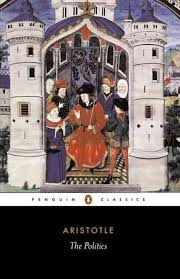
The Politics
Highlights:
“Man is by nature a political animal” In The Politics Aristotle addresses the questions that lie at the heart of political science. How should society be ordered to ensure the happiness of the individual? Which forms of government are best and how should they be maintained? By analysing a range of city constitutions – oligarchies, democracies and tyrannies – he seeks to establish the strengths and weaknesses of each system to decide which are the most effective, in theory and in practice. A hugely significant work, which has influenced thinkers as diverse as Aquinas and Machiavelli, The Politics remains an outstanding commentary on fundamental political issues and concerns, and provides fascinating insights into the workings and attitudes of the Greek city-state. The introductions by T. A. Sinclair and Trevor J. Saunders discuss the influence of The Politics on philosophers, its modern relevance and Aristotle’s political beliefs. This edition contains Greek and English glossaries, and a bibliography for further reading. For more than seventy years, Penguin has been the leading publisher of classic literature in the English-speaking world. With more than 1,700 titles, Penguin Classics represents a global bookshelf of the best works throughout history and across genres and disciplines. Readers trust the series to provide authoritative texts enhanced by introductions and notes by distinguished scholars and contemporary authors, as well as up-to-date translations by award-winning translators.

The Politics of Aristotle (Galaxy Books)
Highlights:
Aristotle’s Politics is a key document in Western political thought. In these first two books Aristotle shows his complete mastery of political theory and practice, and raises many crucial issues still with us today. In Book I he argues vigorously for a political theory based on ‘nature’. By nature, man is a ‘political animal’, one naturally fitted for life in a polis or state. Some people, however, are natural slaves; and women are by nature subordinate to men. Acquisition and exchange are natural, but not trading for profit. In Book II he launches a sharp attack on Plato’s two ‘utopias’, the Republic and the Laws, and also criticizes three historical states reputed to be well governed: Sparta, Crete, and Carthage. This volume contains a close translation of these two books, together with a philosophical commentary. It is well suited to the requirements of readers who do not know Greek.