


Shopping cart is empty!
Home
Showing 7525–7536 Products of 11194 Products
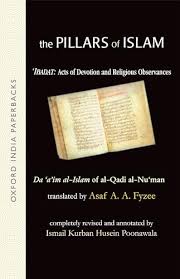
The Pillars of Islam: Ibadat: Acts of Devotion and Religious Observancies: Ibadat – Acts of Devotion and Religious Observancies: volume 1
Highlights:
The Pillars of Islam was the culmination of Nu’man’s more than thirty years of effort in the field of jurisprudence. Considered to be the greatest authority on Isma’ili law, this work is essential for scholars and students of Islamic law.
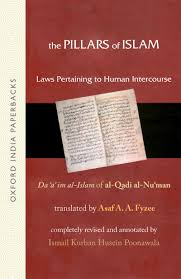
The Pillars of Islam: Laws Pertaining to Human Intercourse Volume II
Highlights:
The Pillars of Islam, was the culmination of Nu’man’s efforts in the field of jurisprudence for more than thirty years. It was commissioned by the Fatimid Caliph al Mu’izz-Din Allah and was officially promulgated as the state code. The judicial and legal system constructed in The Pillars, both for the use of the state as well as the Isma’ili community is, therefore, unique, and Nu’man is rightly considered as its founder. The Pillars is considered by the Musta’li-Tayyibi Bohras as the greatest authority on Isma’ili law and has until today remained as the greatest authority in their legal matters. It is also applied by courts in the Indo-Pakistan subcontinent in personal and family matters as the Isma’ili law manual.
The second volume of the pillars of Islam deals more precisely with the law than the first volume. It deals with a wide range of subjects such as food, dress, medicine, oaths, hunting, business transactions, loans, partition and construction, evidence, marriage, divorce, wills, inheritance, criminal punishments, questions of apostasy and etiquette of judges.
Essential for all libraries and institutions that buy books on Islamic law/studies. This is critical reading for scholars and students of law and religion. It will be especially important for lawyers and judges as this is the greatest authority on Isma’ili law up to the present day and it remains the source of supreme authority in their legal matters. It will also be useful to scholars and students of applied jurisprudence and philosophy.

The Pillow Book
Highlights:
The classic portrayal of court life in tenth-century Japan Written by the court gentlewoman Sei Shonagon, ostensibly for her own amusement, The Pillow Book offers a fascinating exploration of life among the nobility at the height of the Heian period, describing the exquisite pleasures of a confined world in which poetry, love, fashion, and whim dominated, while harsh reality was kept firmly at a distance. Moving elegantly across a wide range of themes including nature, society, and her own flirtations, Sei Shonagon provides a witty and intimate window on a woman’s life at court in classical Japan. For more than seventy years, Penguin has been the leading publisher of classic literature in the English-speaking world. With more than 1,700 titles, Penguin Classics represents a global bookshelf of the best works throughout history and across genres and disciplines. Readers trust the series to provide authoritative texts enhanced by introductions and notes by distinguished scholars and contemporary authors, as well as up-to-date translations by award-winning translators.

The Plague, The Fall, Exile and the Kingdom, and Selected Essays
Highlights:
From one of the most brilliant and influential thinkers of the twentieth century–two novels, six short stories, and a pair of essays in a single volume. In both his essays and his fiction, Albert Camus (1913—1960) de-ployed his lyric eloquence in defense against despair, providing an affirmation of the brave assertion of humanity in the face of a universe devoid of order or meaning. The Plague–written in 1947 and still profoundly relevant–is a riveting tale of horror, survival, and resilience in the face of a devastating epidemic. The Fall (1956), which takes the form of an astonishing confession by a French lawyer in a seedy Amsterdam bar, is a haunting parable of modern conscience in the face of evil. The six stories of Exile and the Kingdom (1957) represent Camus at the height of his narrative powers, masterfully depicting his characters–from a renegade missionary to an adulterous wife –at decisive moments of revelation. Set beside their fictional counterparts, Camus’s famous essays “The Myth of Sisyphus” and “Reflections on the Guillotine” are all the more powerful and philosophically daring, confirming his towering place in twentieth-century thought.


The Pledge
Highlights:
A foreign correspondent in India at the end of World War II, Bruce Bacon had many political contacts, including one with a member of the Communist Party that caused him to be hustled back to the United States–plunged into the McCarthy madness, stripped of his career. His one salvation, Molly Maguire, sustained him throughout.

The Pledge
Highlights:
Tells of a man who, at the end of his career as a World War II foreign correspondent in India, finds himself the victim of McCarthy era persecution