




Shopping cart is empty!
Home
Showing 709–720 Products of 11194 Products
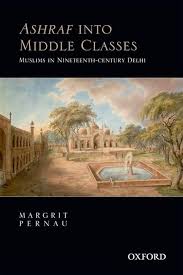
Ashraf into Middle Classes
Highlights:
Nineteenth-century Delhi was marked by a curious mixture of political upheaval and cultural resurgence. Drawing on a wide variety of little-known sources in Urdu and Persian, apart from the more conventional British records, this book provides a revelatory and vivid narrative of Muslims in the period covering the British conquest in 1803 to the end of the Khilafat movement in 1922. Moving away from the tendency of studies on Muslims to focus on religious identity, this book allows us to historicize Islam and socially contextualize its many manifestations.
Treating identities as inherently dynamic and ever changing, Pernau argues that religious identity became central for Muslims only in the last third of the nineteenth century, and this was closely linked with the creation of a middle class whose members described themselves as ashraf, or “men from a good family.” The new concept of respectability or sharafat on which the middle class was based allowed it to, at once, draw a distance from the old nobility, bring the learned section of the community closer to the businessmen, and demarcate it sharply from the subalterns.
The book focuses on the agency of historical actors–their perceptions and memories–to help us understand what it means to be a “Muslim” as well as fathom the varied interactions between identities defined by religion, language, geography, and gender.
Asoka and the Decline of the Mauryas
Highlights:
This book discusses the history of the Mauryas with a special emphasis on the reign and activities of Asoka. It focuses on sources, socio-economic conditions, administration, Dhamma, foreign relations, and the decline of the Mauryas. This third edition contains a new foreword which updates research.
Asoka and the Decline of the Mauryas
Highlights:
This book discusses the history of the Mauryas with a special emphasis on the reign and activities of Asoka. It focuses on sources, socio-economic conditions, administration, Dhamma, foreign relations, and the decline of the Mauryas. This third edition contains a new foreword which updates research.

Asoka and the Decline of the Mauryas
Highlights:
First published in 1961, this classic work is based largely on the edicts of Asoka, whose policies are analyzed against the background of Mauryan civilization during the third and fourth centuries B.C. The present edition has been thoroughly revised with a new afterword and archaeological site map.