





Shopping cart is empty!
Home
Showing 6733–6744 Products of 11194 Products

The Fourth K: A Novel
Highlights:
When a terrorist targets his daughter, President Francis Xavier Kennedy responds with bloody decision.

The French Revolution
Highlights:
Concise, convincing and exciting, this is Christopher Hibbert’s brilliant account of the events that shook eighteenth-century Europe to its foundation. With a mixture of lucid storytelling and fascinating detail, he charts the French Revolution from its beginnings at an impromptu meeting on an indoor tennis court at Versailles in 1789, right through to the ‘coup d’etat’ that brought Napoleon to power ten years later. In the process he explains the drama and complexities of this epoch-making era in the compelling and accessible manner he has made his trademark. Writing in The Times, Richard Holmes described the book as ‘A spectacular replay of epic action …’ while The Good Book Guide called it, ‘Unquestionably the best popular history of the French Revolution’.

THE FUNDAMENTALS OF RELIGION
Highlights:
We find today in different parts of the world fierce feuds and strifes. Religious fanaticism and fundamentalism contribute in a substantial way to such strifes and conflicts among people. We also find a large number of people are steeped in superstitions, irrational beliefs, and indulge in mere ritualism. Where true religion prevails, such fanaticism and fundamentalism find no place. A deep comparative study of world religions enables one to drive away all superstitions and fanaticism. For religion, in the true sense, is an abiding faith in the values of life, and God is the embodiment of all values. Religious experience accordingly implies the realisation of the Absolute. What Prof. Nalini Kanta Brahma tries to do in this well-researched book, written in a clear and straightforward style, is to demonstrate the nobility and positive aspects of each religion he has discussed. He classifies religion into three categories: Impersonal—under which he brings in Buddhism, Jainism and Confucianism; Personal—in this category he describes Christianity, Islam and Vaishnavism; and Supra-personal—under which he analyzes Vedantism, Sufism, Taoism and the Johanine Gospel (the Gospel of St. John, one of the twelve disciples of Jesus Christ). The fundamentals of each religion are discussed with great clarity and genuine appreciation. Knowing very well there are a large number of opponents to religion, the author vigorously defends the religious view. He successfully meets the various objections of Freud, Marx and Bertrand Russel, among others. For, he says, agnosticism, atheism and scepticism are based on a narrow and limited view of life. Realisation of divinity by man is the universal characteristic of all religions, and the author contends that it should aptly be called the universal religion. This realisation of the divinity is so marked in the supra-personal religions and being a votary of such religions, he stresses that they are on a different level. If a study of this world religion is included in the course on comparative religion for students, it would certainly help towards dispelling erroneous notions about religion and drive away many superstitions, fanaticism and communalism, the last being a cancerous growth that eats into the very fabric of a nation. Besides students of philosophy who study comparative religion as one of their subjects, all enlightened persons who have an abiding faith in religion should find reading this text an exhilarating and ennobling experience.

The Fundamentals of Religion
Highlights:
We find today in different parts of the world fierce feuds and strifes. Religious fanaticism and fundamentalism contribute in a substantial way to such strifes and conflicts among people. We also find a large number of people are steeped in superstitions, irrational beliefs, and indulge in mere ritualism. Where true religion prevails, such fanaticism and fundamentalism find no place. A deep comparative study of world religions enables one to drive away all superstitions and fanaticism. For religion, in the true sense, is an abiding faith in the values of life, and God is the embodiment of all values. Religious experience accordingly implies the realisation of the Absolute. What Prof. Nalini Kanta Brahma tries to do in this well-researched book, written in a clear and straightforward style, is to demonstrate the nobility and positive aspects of each religion he has discussed. He classifies religion into three categories: Impersonal—under which he brings in Buddhism, Jainism and Confucianism; Personal—in this category he describes Christianity, Islam and Vaishnavism; and Supra-personal—under which he analyzes Vedantism, Sufism, Taoism and the Johanine Gospel (the Gospel of St. John, one of the twelve disciples of Jesus Christ). The fundamentals of each religion are discussed with great clarity and genuine appreciation. Knowing very well there are a large number of opponents to religion, the author vigorously defends the religious view. He successfully meets the various objections of Freud, Marx and Bertrand Russel, among others. For, he says, agnosticism, atheism and scepticism are based on a narrow and limited view of life. Realisation of divinity by man is the universal characteristic of all religions, and the author contends that it should aptly be called the universal religion. This realisation of the divinity is so marked in the supra-personal religions and being a votary of such religions, he stresses that they are on a different level. If a study of this world religion is included in the course on comparative religion for students, it would certainly help towards dispelling erroneous notions about religion and drive away many superstitions, fanaticism and communalism, the last being a cancerous growth that eats into the very fabric of a nation. Besides students of philosophy who study comparative religion as one of their subjects, all enlightened persons who have an abiding faith in religion should find reading this text an exhilarating and ennobling experience.

The Fungal Pharmacy
Highlights:
The ultimate guide to maximizing the healing properties of medicinal mushrooms and lichens—featuring over 300 detailed plant profiles for easy mushroom identification In The Fungal Pharmacy, noted herbalist Robert Rogers introduces readers to more than 300 species of medicinal mushrooms and lichens found in North America. These fungi, Rogers explains, have the capacity to heal both the body and, through the process of myco-remediation, the planet itself. Throughout the book, he documents their success in optimizing the immune system and treating a wide range of acute and chronic diseases, including cardiovascular, respiratory, and liver problems, blood sugar disorders, cancer, and obesity. Entries discuss the mushroom or lichen’s medicinal traits and properties, including active chemical components, preparation methods (including extracts, essences, and essential oils), and historical as well as modern-day usage. Two hundred full-color photos and thorough descriptions make identification easy for the reader. Rogers also delves into the cultural, religious, and literary significance of each mushroom, featuring fascinating tidbits about each one’s etymology and history.

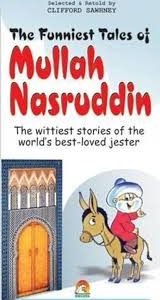
The Funniest Tales of Mullah Nasruddin
Highlights:
Mullah Nasruddin is undoubtedly the best-known trickster and wit in human history. This book deals with his tales of yore. After every tale, the author has added a creative insight.
The Funniest Tales of Mullah Nasruddin
Highlights:
Mullah Nasruddin is undoubtedly the best-known trickster and wit in human history. This book deals with his tales of yore. After every tale, the author has added a creative insight.