



Shopping cart is empty!
Home
Showing 6469–6480 Products of 11194 Products
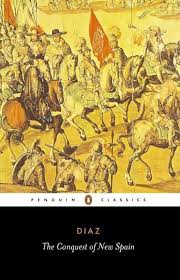
The Conquest of New Spain
Highlights:
Vivid, powerful and absorbing, this is a first-person account of one of the most startling military episodes in history: the overthrow of Montezuma’s doomed Aztec Empire by the ruthless Hernan Cortes and his band of adventurers. Bernal Díaz del Castillo, himself a soldier under Cortes, presents a fascinatingly detailed description of the Spanish landing in Mexico in 1520 and their amazement at the city, the exploitation of the natives for gold and other treasures, the expulsion and flight of the Spaniards, their regrouping and eventual capture of the Aztec capital. For more than seventy years, Penguin has been the leading publisher of classic literature in the English-speaking world. With more than 1,700 titles, Penguin Classics represents a global bookshelf of the best works throughout history and across genres and disciplines. Readers trust the series to provide authoritative texts enhanced by introductions and notes by distinguished scholars and contemporary authors, as well as up-to-date translations by award-winning translators.

The Conscious Universe: Part and Whole in Modern Physical Theory
Highlights:
This discussion resulted from a dialogue which began some seven years ago between a physicist who specializes in astrophysics, general relativity, and the foundations of quantum theory, and a student of cultural history who had done post-doctoral work in the history and philosophy of science. Both of us at that time were awaiting the results of some experiments being conducted under the direction of the physicist Alain Aspect at the University of Paris-South. ! The experiments were the last in a series designed to test some predictions based on a mathematical 2 theorem published in 1964 by John Bell. There was no expectation that the results of these experiments would provide the basis for developing new technologies. The questions which the experiments were designed to answer concerned the relation ship between physical reality and physical theory in the branch of physics known as quantum mechanics. Like most questions raised by physicists which lead to startling new insights, they were disarmingly simple and direct. Is quantum physics, asked Bell, a self-consistent theory whose predictions would hold in a new class of experiments, or would the results reveal that the apparent challenges of quantum physics to the understanding in classical physics of the relationship between physical theory and physical reality were merely illusory? Answering this question in actual experiments could also, suggested Bell, lead to another, quite dramatic, result.

The Conservationist
Highlights:
A prize-winning story of the forces and relationships seething in the South Africa of the day.

The Consolation of Philosophy
Highlights:
Boethius was an eminent public figure under the Gothic emperor Theodoric, and an exceptional Greek scholar. When he became involved in a conspiracy and was imprisoned in Pavia, it was to the Greek philosophers that he turned. The Consolation was written in the period leading up to his brutal execution. It is a dialogue of alternating prose and verse between the ailing prisoner and his ‘nurse’ Philosophy. Her instruction on the nature of fortune and happiness, good and evil, fate and free will, restore his health and bring him to enlightenment. The Consolation was extremely popular throughout medieval Europe and his ideas were influential on the thought of Chaucer and Dante. For more than seventy years, Penguin has been the leading publisher of classic literature in the English-speaking world. With more than 1,700 titles, Penguin Classics represents a global bookshelf of the best works throughout history and across genres and disciplines. Readers trust the series to provide authoritative texts enhanced by introductions and notes by distinguished scholars and contemporary authors, as well as up-to-date translations by award-winning translators.
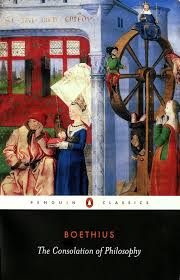
The Consolation of Philosophy
Highlights:
Boethius was an eminent public figure under the Gothic emperor Theodoric, and an exceptional Greek scholar. When he became involved in a conspiracy and was imprisoned in Pavia, it was to the Greek philosophers that he turned. The Consolation was written in the period leading up to his brutal execution. It is a dialogue of alternating prose and verse between the ailing prisoner and his ‘nurse’ Philosophy. Her instruction on the nature of fortune and happiness, good and evil, fate and free will, restore his health and bring him to enlightenment. The Consolation was extremely popular throughout medieval Europe and his ideas were influential on the thought of Chaucer and Dante. For more than seventy years, Penguin has been the leading publisher of classic literature in the English-speaking world. With more than 1,700 titles, Penguin Classics represents a global bookshelf of the best works throughout history and across genres and disciplines. Readers trust the series to provide authoritative texts enhanced by introductions and notes by distinguished scholars and contemporary authors, as well as up-to-date translations by award-winning translators.