


Shopping cart is empty!
Home
Showing 5677–5688 Products of 11194 Products
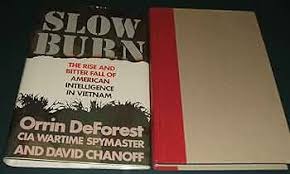
Slow Burn: The Rise and Bitter Fall of American Intelligence in Vietnam
Highlights:
A CIA leader in Vietnam recalls his experiences

Slowly Down the Ganges
Highlights:
This is the story of the 1200-mile journey made by Eric Newby and his wife down the holy river of India, from Hardwar where it enters the great plain down to where the waters of the Hooghly finally flow into the Bay of Bengal.
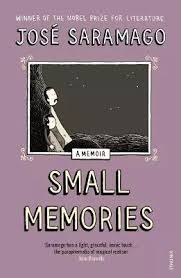
Small Memories
Highlights:
Starred Review. Weaving together memories of his Portuguese childhood, Nobel Prize–winner Saramago (1922–2010) presents a lyrical portrait of the artist as a young man. Born in the small village of Azinhaga and raised in Lisbon, Saramago recounts his early days not in the traditional linear fashion but as snippets of reminiscences that flow from one topic—and time period—to another. The days spent in Azinhaga, exploring the countryside with a child’s keen eye for adventure and spending time in his maternal grandparents’ cottage, are beautifully depicted and resonate even more deeply when Saramago describes the modernization that has made his boyhood home unrecognizable. Readers will also recognize the trademark undercurrent of wit in Saramago’s stories, such as how a village joke resulted in his surname being recorded incorrectly on his birth certificate (“Saramago” means wild radish) and how an early attempt to master French was actually a childhood introduction to Molière. Yet all is not merry as Saramago recalls the tragic death of his older brother, Francisco, at age four, which causes him to explore the concept of so-called “false memories,” as well as his family’s poverty. With its poetic style, this posthumous memoir is the perfect coda to Saramago’s distinguished career. (Apr.)
(c) Copyright PWxyz, LLC. All rights reserved.
From Booklist
Starred Review The Portuguese recipient of the 1998 Nobel Prize in Literature died in 2010, leaving for posthumous publication his last novel, the rousing, delightful Elephant’s Journey, and this equally charming memoir of his childhood (‘the small memories of when I was small’), which is certainly one of the most sheerly beautiful writing exercises in any mode or genre of the season. In common with other writers who take backward glances at life, Saramago spends time’and in his case, lush time’remembering being raised amid idiosyncratic relatives and neighbors, who, if not directly supplying fodder for future writing endeavors, at least gave Saramago an early sensitivity to the fact that the best drama is about ordinary folk (one man is described as someone who ‘lacked the intelligence to know which way the wind was blowing, or if indeed there was any wind’). What makes the book so distinctive and charming is that Saramago admits that certain of his memories have a fuzzy provenance’did he actually experience this or that event or just hear about them later?’yet at the same time, he simply lets the narrative roll along in verbal splendor and poignant intimacy, leaving the question of truth-rooted accuracy versus hit-or-miss impressions a moot point. –Brad Hooper

Smaller Signs of the Day
Highlights:
The Day of Judgment in sure to come, but when it will be, it is a matter known only to Allah the Great. But the Prophet Muhammad (S) has told us about some signs that indicate that the Day is coming nearer and nearer. Such signs are of three types: The first type of signs have already come to pass. The second type of signs are those that appear gradually with the passage of time. The third type is of the signs that appear just very near to the Day- these are called the Greater Signs of the Day. In this book we have dealt with the first two types of the signs that are known to be the Smaller Signs of the Day.

Smiley’s People
Highlights:
Paris, London, Germany, and Switzerland are the settings for a tale of espionage in which a final, conclusive confrontation takes place between George Smiley and his Russian adversary, Karla