








Shopping cart is empty!
Home
Showing 3445–3456 Products of 11194 Products

Jaipur Nama: Tales from the Pink City
Highlights:
Jaipur Nama is the story of one of India’s most fascinating cities, as seen through the eyes of both its residents and its visitors, who witnessed and recorded different moments in Jaipur’s history between the 18th and 20th centuries. The triumph, follies and foibles of its rulers, the passions and drama of palace intrigues, the splendor of royal rites and entertainments, and the bustle and energy of tis bazaars and ateliers, all come to life through the vivid and detailed accounts of chroniclers as diverse as an Austrian Jesuit, a French naturalist, a court priest, a city merchant and a pilgrim from Banaras. Many of these accounts are here translated into English for the first time. Each reflects a different aspect of Jaipur, together creating a captivating, kaleidoscopic portrait of the Pink City. Linking these narratives are the observations, experiences and perceptions of the author, Giles Tillotson, who skillfully weaves the past into the present as he writes about the personalities who shaped the character of the city, the wonders of its architectures, and the development of its superb arts and crafts. Entertaining as well as scholarly, Jaipur Nama will appeal to a wide readership. For those who know Jaipur or plan to go there, this book will sharpen and enrich their experience of the city, while armchair travelers will find it a delightfully witty and knowledgeable companion.
Jami
Highlights:
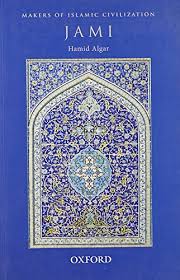
Abd al-Rahman Jami (1414-1492) is a culminating figure in Perso-Islamic culture, whose reputation and influence have remained undiminished throughout the eastern Islamic world–the Ottoman empire and Central Asia, Iran, India, China, and the Malay world. Primarily celebrated as a poet, Jami was also an accomplished Islamic scholar and Arabist, a Sufi of great standing, and an acerbic polemicist and social critic. He was most closely associated with the Timurid dynasty; but his international renown made him a favourite also of other political powers of the time.
In this masterfully concise study, Algar begins with a sketch of the geographical and historical landscape behind the events of Jami’s life in Herat and beyond. He explains the influences upon his character and work, the factors that shaped his poetic output, its literary forms, and thematic concerns, the reasons for the precise configuration of his Sufism within the Naqshbandiyya, and his combative support for some of the doctrines of Ibn ‘Arabi. Algar also discusses the concept and Jami’s practice of ‘seclusion within society’, whereby the Sufi was attentive to the problems of the community while being detached from them. Jami’s social critique and some of his polemic against fake scholars and sham Sufis can be understood as part of that concern for community. Finally, Algar surveys the transmission of Jami’s literary, intellectual, and spiritual legacy to the eastern Islamic world, and, within suggestions for further reading and study, he presents an overview of recent Jami scholarship in the Islamic world, the West, and China.
Jami: Makers of Islamic Civilization
Highlights:
Abd al-Rahman Jami (1414-1492) is a culminating figure in Perso-Islamic culture, whose reputation and influence have remained undiminished throughout the eastern Islamic world–the Ottoman empire and Central Asia, Iran, India, China, and the Malay world. Primarily celebrated as a poet, Jami was also an accomplished Islamic scholar and Arabist, a Sufi of great standing, and an acerbic polemicist and social critic. He was most closely associated with the Timurid dynasty; but his international renown made him a favourite also of other political powers of the time.
In this masterfully concise study, Algar begins with a sketch of the geographical and historical landscape behind the events of Jami’s life in Herat and beyond. He explains the influences upon his character and work, the factors that shaped his poetic output, its literary forms, and thematic concerns, the reasons for the precise configuration of his Sufism within the Naqshbandiyya, and his combative support for some of the doctrines of Ibn ‘Arabi. Algar also discusses the concept and Jami’s practice of ‘seclusion within society’, whereby the Sufi was attentive to the problems of the community while being detached from them. Jami’s social critique and some of his polemic against fake scholars and sham Sufis can be understood as part of that concern for community. Finally, Algar surveys the transmission of Jami’s literary, intellectual, and spiritual legacy to the eastern Islamic world, and, within suggestions for further reading and study, he presents an overview of recent Jami scholarship in the Islamic world, the West, and China.

Jawaharlal Nehru An Autobiography
Highlights:
First published in 1936, and now available in a centenary edition, this book was written by Nehru almost entirely in prison from June 1934 to February 1935. His account, though replete with autobiographical details, is much more than a personal document; in the words of Rabindranath Tagore, “Through all its details there runs a deep current of humanity which overpasses the tangles of facts and leads us to the person who is greater than his deeds, and truer than his surroundings.”