






Shopping cart is empty!
Home
Showing 3181–3192 Products of 11194 Products

Incidents of Travel in Central America, Chiapas and Yucatan, Volume I
Highlights:
Few explorers have had the experience of uncovering a civilization almost entirely unknown to the world. But Stephen’s two expeditions to Mexico and Central America in 1839 and 1841 yielded the first solid information on the culture of the Maya Indians. In this work, and in his other masterpiece Incidents of Travel in Yucatan, he tells the story of his travels to some 50 ruined Mayan cities.
In this book, he describes the excitement of exploring the magnificent ruined cities of Copan and Palenque, and his briefer excursions to Quirigua, Patinamit, Utatlan, Gueguetenango, Ocosingo, and Uxmal. For all these cities, his details are so accurate that more recent explorers used the book as a Baedeker to locate ruins forgotten by even the Indians.
In addition to being a great book on archaeological discovery, Stephen’s work is also a great travel book. Telling of journeying by mule back on narrow paths over unimaginable deep ravines, through sloughs of mud and jungles of heavy vegetation, describing dangers of robbery, revolution, fever, mosquitoes and more exotic insects, Stephen’s narrative remains penetrating and alive. His account of his attempt to buy Copan for $50 is told with the adroitness of a Mark Twain, and his descriptions of Indian life — primitive villages a few miles from the ruins, burials, treatment of the sick, customs, amusements, etc. — never lose their interest.
Frederick Catherwood’s illustrations virtually double the appeal of the book. Highly exact, remarkably realistic drawings show overall views, ground plans of the cities, elevations of palaces and temples, free-standing sculpture, carved hieroglyphics, stucco bas-reliefs, small clay figures, and interior details.

Incidents of Travel in Central America, Chiapas and Yucatan, Volume II
Highlights:
“The ground was entirely new; there were no guide-books or guides; the whole was a virgin soil. At one time we stopped to cut away branches and vines which concealed the face of a monument, and then to dig around and bring to light a fragment, a sculptured corner of which protruded from the earth. I leaned over with breathless anxiety while the Indians worked, and an eye, an ear, a foot, or a hand was disentombed.”
Few explorers have had the experience of uncovering a civilization almost entirely unknown to the world. But Stephen’s two expeditions to Mexico and Central America in 1839 and 1841 yielded the first solid information on the culture of the Maya Indians. In this work, and in his other masterpiece Incidents of Travel in Yucatan, he tells the story of his travels to some 50 ruined Mayan cities.
In this book, he describes the excitement of exploring the magnificent ruined cities of Copan and Palenque, and his briefer excursions to Quirigua, Patinamit, Utatlan, Gueguetenango, Ocosingo, and Uxmal. For all these cities, his details are so accurate that more recent explorers used the book as a Baedeker to locate ruins forgotten by even the Indians.
In addition to being a great book on archaeological discovery, Stephen’s work is also a great travel book. Telling of journeying by mule back on narrow paths over unimaginable deep ravines, through sloughs of mud and jungles of heavy vegetation, describing dangers of robbery, revolution, fever, mosquitoes and more exotic insects, Stephen’s narrative remains penetrating and alive. His account of his attempt to buy Copan for $50 is told with the adroitness of a Mark Twain, and his descriptions of Indian life — primitive villages a few miles from the ruins, burials, treatment of the sick, customs, amusements, etc. — never lose their interest.
Frederick Catherwood’s illustrations virtually double the appeal of the book. Highly exact, remarkably realistic drawings show overall views, ground plans of the cities, elevations of palaces and temples, free-standing sculpture, carved hieroglyphics, stucco bas-reliefs, small clay figures, and interior details.
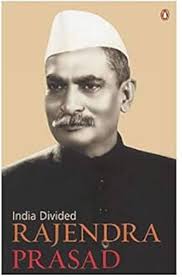
Indi Divided
Highlights:
The question of the partition of India into Muslim and Hindu zones assumed importance after the All-India Muslim League passed a resolution in its favour in March 1940 in Lahore. Most of India Divided was written in prison and it was published in 1946, a year before India was divided. The book specifically examines the theory that the Hindus and Muslims of India were two nations and concludes that the solution for the Hindu–Muslim issue should be sought in the formation of a secular state, with cultural autonomy for the different groups that make up the nation. It traces the origins and growth of the Hindu–Muslim conflict, gives the summary of the several schemes for the partition of India which were put forth and points out the essential ambiguity of the Lahore Resolution. Finally, it deals with the resources of the Muslim-majority states and shows how the suggested scheme of Partition was impracticable and proposes a new solution to the Hindu–Muslim question.

India A History: From the Earliest Civilization to the Boom of the Twenty-First Century
Highlights:
Accommodating Pakistan and Bangladesh and other embryonic nation states like the Sikh Punjab, Muslim Kashmir and Assam, this text examines the legacy of the 1947 partition, and looks at the colonial era from the overall context of Indian history.