



Shopping cart is empty!
Home
Showing 2665–2676 Products of 11194 Products

Hand book on Herbal Medicines
Highlights:
India is said to be having advantage of well-recorded and well practiced knowledge of traditional herbal medicine. Herbal medicine products are dietary supplements that people take to improve their health. Many herbs have been used for a long time for claimed health benefits. Herbal medicines are the combination of curative experiences of generations of practises of physicians of aboriginal systems of medicine from time immemorial. Herbal medicines are as well in huge demand in the developed world for health care for the reason that they are efficient, safe and have lesser side effects. They offer cure for various diseases which do not have any modern medicine likes memory loss, osteoporosis, immune disorders, etc. Their use in the developed world has also increased. The herbal medicines today symbolize safety in contrast to the synthetics that are regarded as unsafe to human and environment. In the primeval times, the Indian sagacious held the view that herbal medicines are the only resolution to treat numeral health related problems and diseases. Although herbs had been priced for their medicinal, flavouring and aromatic qualities for centuries, the synthetic products of the modern age surpassed their importance, for a while. However, the blind dependence on synthetics is over and people are returning to the naturals with hope of safety and security. This means there is immense potentiality in the market considering the fact the present book aims to provide you comprehensive knowledge. The book contains Formulae of different Herbal Medicines used in all kind of diseases. The chapters of the book are: Use of herbal medicines for masses, commonly available plants tested for lowering blood sugar, cure of goitre by Ayurvedic herbal medicines, clinical study of chalcopyrite tables in the management of common symptoms of acid dyspepsia holistic management of bronchial asthma, drugs for skin allergy, role of Ayurveda in veterinary science, manufacturers index, botanical name of drugs, research abstracts, Ayurveda on the web databases , drugs and their equivalents along with a directory section. Research scholars, professional students, scientists, new entrepreneurs, and present manufacturers will find valuable educational material and wider knowledge of herbal medicine in this book. Comprehensive in scope, the book provides solutions that are directly applicable to the detailed information of herbal medicine.

Hand Book on Spices
Highlights:
Ever since the commencement of civilization India has been the world’s most preferred destination of spices. The variety and nature of spices available in India makes the country to stand out of the crowd in the international arena. Undoubtedly the country is one of the leading producers and exporters of spices in the world. Getting proper information on this sector of the economy is sure to benefit many budding entrepreneurs. Featured as one of the best sellers the Handbook on Spices is a book for all those thinking of penetrating into the sector and will act as an additional sources of information that are in this line of trade. The book has covered more than 55 spices produced in the country some of which are Black Pepper, Cardamoms, Ginger, Turmeric, Chillies, Vanilla, Tamarind, Coriander, Cumin seeds, Fenugreek, Dill, Garlic, and Onion etc. Along with the list of spices it also provides information on climatic conditions and soil type required for these spices, the planting requirements, the storage condition, composition, uses, the botanical aspect and the varieties of the product available. The chapter on spices will also provide you information about the Diseases and Pests from which the spices have to be protected, wherever required the basis of grading of the spice is also mentioned. The chapters also deal in the quality improvement in Spices by the Solar Drying, Quality Standards for Ajowan Seed and its Powder, Value added Exportable Products from Spice. The spices demand have increased a lot in the world on account of fact that there has been increasing inhabitation of Indian community in developed countries and recently developed taste for Indian delicacies in the international forum. With different climates in different parts of country, India has the potential to produce a variety of spices. Thus the spice market is having a lot of future prospects. This book inculcates the wide-range of information on cultivation and processing of main spices and condiments of India which have been playing imperative role in the development and growth of national economies of several spices producing, importing and exporting countries. This book will be helpful for new entrepreneurs, spice growers, technologists and those who are already in the spice production and are looking to expand further in the present line
Hand Book On Unani Medicines With Formulae, Processes, Uses And Analysis
Highlights:
As an alternative form of medicine, Unani has found favour in India. These Unani practitioners can practice as qualified doctors in India, as the government approve their practice. Unani medicine is very close to Ayurveda. Both are based on theory of the presence of the elements (in Unani, they are considered to be fire, water, earth and air) in the human body. According to followers of Unani medicine, these elements are present in different fluids and their balance leads to health and their imbalance leads to illness. Government have exclusive department of Indian system of medicine inclusive of Unani under Health ministry and several states have department and institutions to ensure the proper regulation and development of Unani medicine in India. Herb gardens, nursery of medicinal plants, experimental and field scale cultivation are the major initiatives taken for the improvement of medicine. Skin disease, liver disorder, sexual disturbances, pulmonary, sinus and communicable diseases are the major effective treatment achieved areas for Unani. Tremendous progress has been registered in the development of modern medicine. Yet, medicinal plants continue to be an important source of drugs throughout the world. Unani medicine is one of them, plant as a source of drugs of much more important for the developing countries. This book majorly deals with the, habitat, description, procedure and time of collection, chemical constituents, method of processing, therapeutic uses of medicinal plants. This book also constitutes the list of institutes of Unani medicines, list of college of Unani medicines in India, world importers of natural medicine. This publication is one of its kinds which clearly indicate the usefulness of Unani medicine, shows how the plant secrets, preserve the natural secrets/ hormones/ juices which ultimately uses in Unani system of medicine. This book is most informative and useful for students, Research scholars and scientist. We hope this book will achieve the long standing demand of herbal chemists. TAGS Handbook on Unani Medicines with Formulae, Processes, Uses and Analysis Unani Medicine in India, Process of Arabic & Yunani Medicine, Unani tibb, Arabian medicine, Islamic medicine, Animal Origin Drugs Used in Unani Medicine, Formulae of Unani Medicine Products, Medicinal Plants of Yunani Medicines, Ayurveda Medicines, Siddha Medicine, Medicinal Plants from Siddha System of Medicine, Medicinal Plants Used in Ayurveda, Yunani and Siddha, Medicine and Medicinal Plants Ayurveda, Aatrilal (Ammi Majus), Formulae of Azaraqi (Strychnos Nux-Vomica), Baqla (Vicia Faba), Process of Bazrulbanj (Hyoscyamus), Formulae of Chobchini (Smilax China), Formulae of Dudhi, Dudhi Khurd (Euphorbia Thymifolia), Process of Fifil Siyah (Piper Nigrum), Gaozaban (Borago Officinalis), Habbun Neel (Ipomoea Nil), Formulae of Halela Siyah (Terminalia Chebula), Formulae of Heel Khurd (Elettaria Cardamomum), Formulae of Inderjeo Talkh (Holarrhena Antidysenterica), Process of Ispand (Peganum Harmala), Process of Karanj (Pongamia Pinnata), Process of Karnab (Brassica Oleracea), Formulae of Khella (Ammi Visnaga), Mako (Solanum Nigrum), Formulae of Mundi (Sphaeranthus Indicus), Narjeel Daryaee (Lodoicea Maldivica), Process of Panwad (Cassia Tora), Formulae of Sambhalu (Vitex Negundo), Turbud (Operculina Turpethum), Cupri Sulphas, Process of Potassii Nitras, Process of Sodii Carbonas Impure, Formulae of Zincum, Zinci Oxidum, Formulae of Animal Flesh, Process of Mel, Urine, Snake Venom, Process of Ostrea Edulis, Process of M. Trianthema, Viverra Civetta, Chelonia, Bombyx Mori, Formulae of Stannic Sulphidum, Silicum, Process of Plumbi Oxidum, Process of Makaradhwaja, Formulae of Adamas, Preservation and Storage, Habitat, Method of Processing, Powdered Drug, Morphology
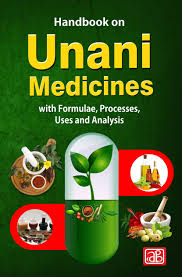
Hand Book On Unani Medicines With Formulae, Processes, Uses And Analysis
Highlights:
As an alternative form of medicine, Unani has found favour in India. These Unani practitioners can practice as qualified doctors in India, as the government approve their practice. Unani medicine is very close to Ayurveda. Both are based on theory of the presence of the elements (in Unani, they are considered to be fire, water, earth and air) in the human body. According to followers of Unani medicine, these elements are present in different fluids and their balance leads to health and their imbalance leads to illness. Government have exclusive department of Indian system of medicine inclusive of Unani under Health ministry and several states have department and institutions to ensure the proper regulation and development of Unani medicine in India. Herb gardens, nursery of medicinal plants, experimental and field scale cultivation are the major initiatives taken for the improvement of medicine. Skin disease, liver disorder, sexual disturbances, pulmonary, sinus and communicable diseases are the major effective treatment achieved areas for Unani. Tremendous progress has been registered in the development of modern medicine. Yet, medicinal plants continue to be an important source of drugs throughout the world. Unani medicine is one of them, plant as a source of drugs of much more important for the developing countries. This book majorly deals with the, habitat, description, procedure and time of collection, chemical constituents, method of processing, therapeutic uses of medicinal plants. This book also constitutes the list of institutes of Unani medicines, list of college of Unani medicines in India, world importers of natural medicine. This publication is one of its kinds which clearly indicate the usefulness of Unani medicine, shows how the plant secrets, preserve the natural secrets/ hormones/ juices which ultimately uses in Unani system of medicine. This book is most informative and useful for students, Research scholars and scientist. We hope this book will achieve the long standing demand of herbal chemists. TAGS Handbook on Unani Medicines with Formulae, Processes, Uses and Analysis Unani Medicine in India, Process of Arabic & Yunani Medicine, Unani tibb, Arabian medicine, Islamic medicine, Animal Origin Drugs Used in Unani Medicine, Formulae of Unani Medicine Products, Medicinal Plants of Yunani Medicines, Ayurveda Medicines, Siddha Medicine, Medicinal Plants from Siddha System of Medicine, Medicinal Plants Used in Ayurveda, Yunani and Siddha, Medicine and Medicinal Plants Ayurveda, Aatrilal (Ammi Majus), Formulae of Azaraqi (Strychnos Nux-Vomica), Baqla (Vicia Faba), Process of Bazrulbanj (Hyoscyamus), Formulae of Chobchini (Smilax China), Formulae of Dudhi, Dudhi Khurd (Euphorbia Thymifolia), Process of Fifil Siyah (Piper Nigrum), Gaozaban (Borago Officinalis), Habbun Neel (Ipomoea Nil), Formulae of Halela Siyah (Terminalia Chebula), Formulae of Heel Khurd (Elettaria Cardamomum), Formulae of Inderjeo Talkh (Holarrhena Antidysenterica), Process of Ispand (Peganum Harmala), Process of Karanj (Pongamia Pinnata), Process of Karnab (Brassica Oleracea), Formulae of Khella (Ammi Visnaga), Mako (Solanum Nigrum), Formulae of Mundi (Sphaeranthus Indicus), Narjeel Daryaee (Lodoicea Maldivica), Process of Panwad (Cassia Tora), Formulae of Sambhalu (Vitex Negundo), Turbud (Operculina Turpethum), Cupri Sulphas, Process of Potassii Nitras, Process of Sodii Carbonas Impure, Formulae of Zincum, Zinci Oxidum, Formulae of Animal Flesh, Process of Mel, Urine, Snake Venom, Process of Ostrea Edulis, Process of M. Trianthema, Viverra Civetta, Chelonia, Bombyx Mori, Formulae of Stannic Sulphidum, Silicum, Process of Plumbi Oxidum, Process of Makaradhwaja, Formulae of Adamas, Preservation and Storage, Habitat, Method of Processing, Powdered Drug, Morphology

Handbook of African Medicinal Plants
Highlights:
Handbook of African Medicinal Plants provides a comprehensive review of over 1,000 species of plants employed in indigenous African medicine. It gives a concise description of the materia medica of an enormous and extensively varied continent, with well over 2,000 distinct tribes and several distinct floras. A detailed pharmacognostical profile of the major herbs is presented, including the common name, synonyms, African names, habitat and distribution, medicinal uses, chemical constituents, and published pharmacologic activity. This extensive catalog of plants is presented both in alphabetic order and according to family. References are cited from over 600 publications, and photographs and sketches illustrate many of the plants. The book also provides an introduction to African cosmology and beliefs as they relate to healing and the use of herbs. Handbook of African Medicinal Plants is an invaluable, practical desk reference that should be on the bookshelf of every pharmacognosist, ethnobiologist, botanist, ecologist, phytochemist, pharmacologist, and scientist interested in tropical plant utilization as a tool for the conservation of biodiversity and as a source of new drug leads.
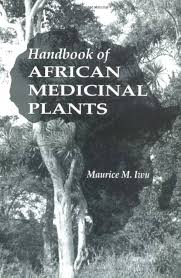
Handbook of African Medicinal Plants, Second Edition
Highlights:
Handbook of African Medicinal Plants provides a comprehensive review of over 1,000 species of plants employed in indigenous African medicine. It gives a concise description of the materia medica of an enormous and extensively varied continent, with well over 2,000 distinct tribes and several distinct floras. A detailed pharmacognostical profile of the major herbs is presented, including the common name, synonyms, African names, habitat and distribution, medicinal uses, chemical constituents, and published pharmacologic activity. This extensive catalog of plants is presented both in alphabetic order and according to family. References are cited from over 600 publications, and photographs and sketches illustrate many of the plants. The book also provides an introduction to African cosmology and beliefs as they relate to healing and the use of herbs. Handbook of African Medicinal Plants is an invaluable, practical desk reference that should be on the bookshelf of every pharmacognosist, ethnobiologist, botanist, ecologist, phytochemist, pharmacologist, and scientist interested in tropical plant utilization as a tool for the conservation of biodiversity and as a source of new drug leads.

Handbook of Ayurveda
Highlights:
Ayurveda is both a science of life and a system of medicine. In each of these aspects it emerges as an integral science whose objective is to treat the person as a whole. This handbook is intended as the first in a series of course books on Ayurveda which can be utilized with great profit by the assiduous student of Ayurveda, the medical practitioner or the specialist as well as the average layperson who wishes to lead a harmonious life in tune with nature.
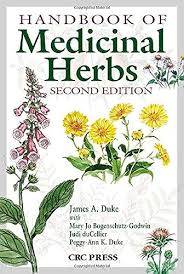
Handbook of Medicinal Herbs
Highlights:
Covers over 800 medicinal plant species with details on safety, efficacy, and usage.