






Shopping cart is empty!
Home
Showing 2029–2040 Products of 11194 Products
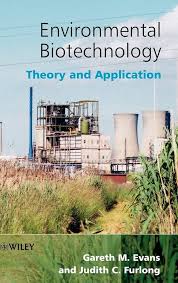
Environmental Biotechnology: Theory and Application
Highlights:
In Environmental Biotechnology-Principles and Applications, the authors connect the many different facets of environmental biotechnology. The book develops the basic concepts and quantitative tools in the first six chapters, which comprise the principles. The text consistently calls upon those principles as it describes the applications in Chapters 7 through 16. The theme is that all microbiological processes behave in ways that are understandable, predictable, and unified. At the same time, each application has its own special features that must be understood. The special features do not overturn or sidestep the common principles. Instead, they complement the principles and are most profitably understood in light of the principles.

Environmental Ecology
Highlights:
Environmental The Impacts of Pollution and Other Stresses on Ecosystem Structure and Function deals with environmental studies on the ecological impacts of anthropogenic stresses. The book discusses more particularly the ways that anthropogenic or natural influences affect the quality of the inorganic and biotic components of the biosphere, as well as the human environment. The text discusses the sources of air pollution, the different toxic elements (naturally occurring contamination or anthropogenic sources), and acidifying substances or “acid rain.” The author also cites several studies that deal with the reclamation of acidified bodies of water. Another topic the author addresses is declining forest areas; he then cites several case studies of this occurrence, such as those by Fowells, 1965; Hepting, 1971; and Auclair, 1987. The text also investigates the ecological effects of oil pollution caused during the refining process and transportation. The author then examines the general response patterns to ecological stress. The text is intended for advanced students of environmental ecology and environmental science, as well as for ecologists, environmentalists, and urban planners and officials.

Environmental Science: Earth as a Living Planet
Highlights:
The tools to help students make their own decisions about the environment Along with this text, students can choose from two supplements that will help them in their studies of environmental issues. These include: Take Note! Inside this convenient notebook, students will find a collection of figures, diagrams, and art that clearly illustrate key concepts featured in this text. Next to each figure, they’ll be able to take notes in the space provided during the class. Not only does this save time, but it also makes a great study aid for exams! Regional Casebooks Students can enhance their studies of environmental issues by examining the case studies featured in the Cascbooks available for Northeast, Central, Southeast, Western U.S. and Canada. each casebook contains real-world examples that illustrate the general concepts featured in this text, along with questions that help reinforce the material. Student Review Guide Chapters will have an overview, frequently asked questions, practice questions, and web links. John Wiley & Sons, Inc., places great value on the environment and is actively involved in efforts to preserve it. Currently, paper of high enough quality to reproduce full-color art effectively contains a maximum of 10% recovered and recycled post-consumer fiber. Whenever possible, Wiley uses paper containing the maximum amount of recycled fibers. In addition, the paper in this book was manufactured by a mill whose forest management programs include sustained yield harvesting of its timberlands. Sustained yield harvesting principles ensure that the number of trees cut each year does not exceed the amount of new growth. Total 10% Recycled Paper All Post-Consumer Waste