





Shopping cart is empty!
Home
Showing 1909–1920 Products of 11194 Products

Emperor Of All Maladies: A Biography Of Cancer
Highlights:
The Emperor of All Maladies is a magnificent, profoundly humane &ldquo,biography&rdquo, of cancer&mdash,from its first documented appearances thousands of years ago through the epic battles in the twentieth century to cure, control, and conquer it to a radical new understanding of its essence. Physician, researcher, and awa

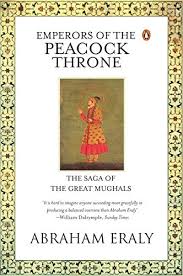
Emperors of the Peacock Throne: The Saga of the Great Mughals
Highlights:
A Stirring Account Of One Of The World S Greatest Empires In December 1525, Zahir-Ud-Din Babur, Descended From Chengiz Khan And Timur Lenk, Crossed The Indus River Into The Punjab With A Modest Army And Some Cannon. At Panipat, Five Months Later, He Fought The Most Important Battle Of His Life And Routed The Mammoth Army Of Sultan Ibrahim Lodi, The Afghan Ruler Of Hindustan. Mughal Rule In India Had Begun. It Was To Continue For Over Three Centuries, Shaping India For All Time. In This Definitive Biography Of The Great Mughals, Abraham Eraly Reclaims The Right To Set Down History As A Chronicle Of Flesh-And-Blood People. Bringing To His Task The Objectivity Of A Scholar And The High Imagination Of A Master Storyteller, He Recreates The Lives Of Babur, The Intrepid Pioneer; The Dreamer Humayun; Akbar, The Greatest And Most Enigmatic Of The Mughals; The Aesthetes Jehangir And Shah Jahan; And The Dour And Determined Aurangzeb.

Empire
Highlights:
Once vast swathes of the globe were coloured imperial red and Britannia ruled not just the waves, but the prairies of America, the plains of Asia, the jungles of Africa and the deserts of Arabia. Just how did a small, rainy island in the North Atlantic achieve all this? And why did the empire on which the sun literally never set finally decline and fall? Niall Ferguson’s acclaimed _Empire_ brilliantly unfolds the imperial story in all its splendours and its miseries, showing how a gang of buccaneers and gold-diggers planted the seed of the biggest empire in all history – and set the world on the road to modernity.
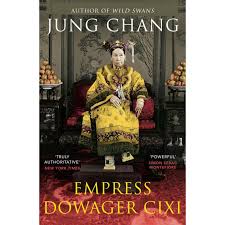
Empress Dowager Cixi
Highlights:
Empress Dowager Cixi (1835–1908) is the most important woman in Chinese history. She ruled China for decades and brought a medieval empire into the modern age.
At the age of sixteen, in a nationwide selection for royal consorts, Cixi was chosen as one of the emperor’s numerous concubines. When he died in 1861, their five-year-old son succeeded to the throne. Cixi at once launched a palace coup against the regents appointed by her husband and made herself the real ruler of China—behind the throne, literally, with a silk screen separating her from her officials who were all male.
In this groundbreaking biography, Jung Chang vividly describes how Cixi fought against monumental obstacles to change China. Under her the ancient country attained virtually all the attributes of a modern state: industries, railways, electricity, the telegraph and an army and navy with up-to-date weaponry. It was she who abolished gruesome punishments like “death by a thousand cuts” and put an end to foot-binding. She inaugurated women’s liberation and embarked on the path to introduce parliamentary elections to China. Chang comprehensively overturns the conventional view of Cixi as a diehard conservative and cruel despot.
Cixi reigned during extraordinary times and had to deal with a host of major national crises: the Taiping and Boxer rebellions, wars with France and Japan—and an invasion by eight allied powers including Britain, Germany, Russia and the United States. Jung Chang not only records the Empress Dowager’s conduct of domestic and foreign affairs, but also takes the reader into the depths of her splendid Summer Palace and the harem of Beijing’s Forbidden City, where she lived surrounded by eunuchs—one of whom she fell in love, with tragic consequences. The world Chang describes here, in fascinating detail, seems almost unbelievable in its extraordinary mixture of the very old and the very new.
Based on newly available, mostly Chinese, historical documents such as court records, official and private correspondence, diaries and eyewitness accounts, this biography will revolutionize historical thinking about a crucial period in China’s—and the world’s—history. Packed with drama, fast paced and gripping, it is both a panoramic depiction of the birth of modern China and an intimate portrait of a woman: as the concubine to a monarch, as the absolute ruler of a third of the world’s population, and as a unique stateswoman.