





Shopping cart is empty!
Home
Showing 1813–1824 Products of 11194 Products
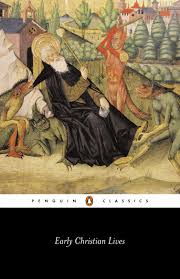
Early Christian Lives
Highlights:
Written between the mid-fourth and late sixth centuries to commemorate and glorify the achievements of early Christian saints, these six biographies depict men who devoted themselves to solitude, poverty and prayer. Athanasius records Antony’s extreme seclusion in the Egyptian desert, despite temptation by the devil and visits from his followers. Jerome also shows those who fled persecution or withdrew from society to pursue lives of chastity and asceticism in his accounts of Paul of Thebes, Hilarion and Malchus. In his Life of Martin, Sulpicius Severus describes the achievements of a man who combined the roles of monk, bishop and missionary, while Gregory the Great tells of Benedict, whose Rule became the template for monastic life. Full of vivid incidents and astonishing miracles, these Lives have provided inspiration as models for centuries of Christian worship. For more than seventy years, Penguin has been the leading publisher of classic literature in the English-speaking world. With more than 1,700 titles, Penguin Classics represents a global bookshelf of the best works throughout history and across genres and disciplines. Readers trust the series to provide authoritative texts enhanced by introductions and notes by distinguished scholars and contemporary authors, as well as up-to-date translations by award-winning translators.

Early Greek Philosophy
Highlights:
The works collected in this volume form the true foundation of Western philosophy—the base upon which Plato and Aristotle and their successors would eventually build. Yet the importance of the Pre-Socratics thinkers lies less in their influence—great though that was—than in their astonishing intellectual ambition and imaginative reach. Zeno’s dizzying ‘proofs’ that motion is impossible; the extraordinary atomic theories of Democritus; the haunting and enigmatic epigrams of Heraclitus; and the maxims of Alcmaeon: fragmentary as they often are, the thoughts of these philosophers seem strikingly modern in their concern to forge a truly scientific vocabulary and way of reasoning. For more than seventy years, Penguin has been the leading publisher of classic literature in the English-speaking world. With more than 1,700 titles, Penguin Classics represents a global bookshelf of the best works throughout history and across genres and disciplines. Readers trust the series to provide authoritative texts enhanced by introductions and notes by distinguished scholars and contemporary authors, as well as up-to-date translations by award-winning translators.