





Shopping cart is empty!
Home
Showing 1597–1608 Products of 11194 Products

Cultural Pasts: Essays in Early Indian History
Highlights:
Cultural Pasts collects essays on a range of subjects in early Indian history. Its focus is on historiography and the changing dimensions of social and cultural history. The essays are divided into nine thematic groups: historiography, both current and from earlier periods; social and cultural transactions; archaeology and history; pre-Mauryan and Mauryan India; forms of exchange; the society of the heroes in the epics and the later tradition of venerating the hero; genealogies and origin myths as historical sources; the social context of the renouncer; and the past in the present–the use of the early past in current ideologies.
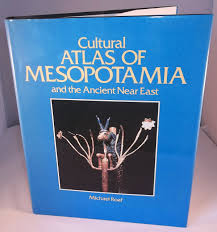
Cultural Atlas of Mesopotamia and the Ancient Near East
Highlights:
53 maps; 468 illustrations, 342 in color
Quite rightly, Mesopotamia has been called the “cradle of civilization”. Lying between the rivers Tigris and Eufrates (Mesopotamia means “between the rivers”) and occupying parts of what are today Iraq and Syria, this ancient word laid the foundation for social development and human progress. The transitions from hunter-gatherer to farmer, and from villages to urban life, first occurred in or around Mesopotamia. It was also there and in the neighboring Near East that the first empires grew up during the Bronze Age and the first written language was developed.
Beginning with the description of the of the physical changes that occurred in the region following the last Ice Age, and their influence on patterns of settlement, the atlas tells the story of the cultural, technological, political and economic achievements of the different peoples, races and tribes who occupied the area in the course of nearly 12,000 years. From the early nomads, it charts the growth of the warring city-states, through the rise of Babylonia and Assyria, and culminating in the mighty Persian empire of Darius and its destruction by Alexander the Great in 330 BC.
As most of what is known about the period is based on archeological finds these are covered in some detail. Among the many uncovered artifacts that have proved of great interest are beveled-rim bowls from the Mediterranian to the Iranian plateau (evidence of the remarkable spread of the Late Uruk culture in the 4th millennium BC), the stone reliefs of the Assyrian palaces (testifying to the power of Assyrian rule and customs of the time) and semiprecious stones carnelian and lapis lazuli used as decoration throughout the region (showing trading links that stretched to Afghanistan and the Indus Valley even as early as 3000 BC).
A lucid text, aimed at the nonspacialist, is accompanied by copious explanatory maps and illustrations in full color. All the major sites that form part of the story are featured, with site plans, drawings and photographs to guide the rader. A wide variety of important topics, including the Royal Cemetery at Ur (discovered by Sir Leonard Wooley), ziggurats (the famous Mesopotamian temple towers) and the Babylonain’s contrinutions to science and mathematics, are presented as special features.
The book includes a Glossary of technical and other terms and contain valuable reference aids in the form of a Chornological Table, Bibliography, and Gazetteer as well as an Index.

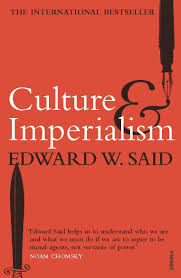
Culture & Imperialism
Highlights:
Following his profoundly influential study, Orientalism, Edward Said now examines western culture. From Jane Austen to Salman Rushdie, from Yeats to media coverage of the Gulf War, Culture and Imperialism is a broad, fierce and wonderfully readable account of the roots of imperialism in European culture.

Culture and Imperialism
Highlights:
Following his profoundly influential study, Orientalism, Edward Said now examines western culture. From Jane Austen to Salman Rushdie, from Yeats to media coverage of the Gulf War, Culture and Imperialism is a broad, fierce and wonderfully readable account of the roots of imperialism in European culture.

Cycles of Time: An Extraordinary New View of the Universe
Highlights:
One of our most distinguished scientists offers a radical new theory of the origin, and ultimate end, of the Universe.
Professor Sir Roger Penrose’s groundbreaking and bestselling The Road to Reality provided a complete guide to the laws that govern our universe. In Cycles of Time, Penrose offers a completely new perspective on the often-asked question, ‘what came before the Big Bang?’ The answer that Penrose proposes involves a curious but fully rational way of looking at the expected ultimate fate of our acclerating expanded universe, and showing that its end can in fact be reinterpreted as the ‘Big Bang’ of a new universe.