

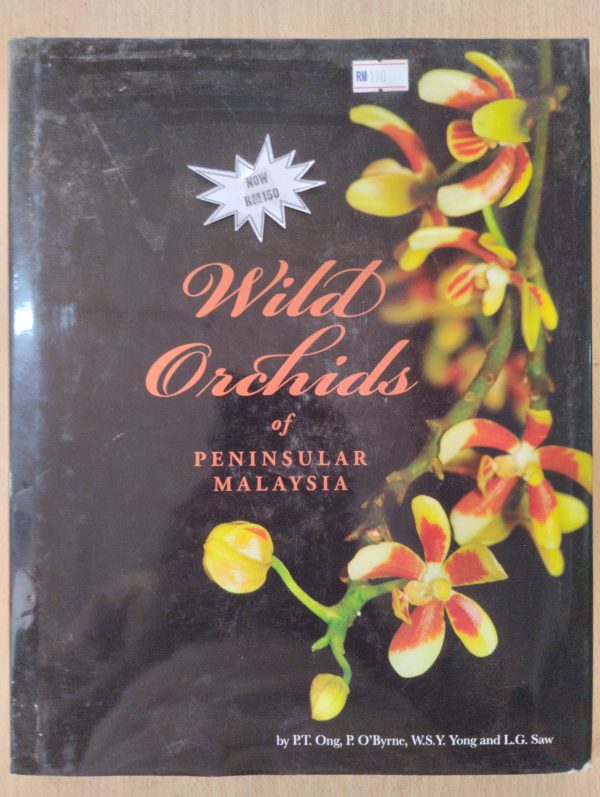
Wild Orchids of Peninsular Malaysia

Please Login to view access options.
This book can only be request by members.
Related Products


A Guide to Battles: Decisive Conflicts in History (Oxford Quick Reference)
Highlights:
Ranging from the Peloponnesian war, to Trafalgar and Gettysburg, to the War in Iraq, this exciting book tells the stories of the most dramatic, memorable, and important conflicts in world history. This superb, one-volume reference describes almost 300 battles from around the world–from the Middle East, Asia, and Africa, as well as from Europe and the Americas. All the battles are grouped in chapters which tell the wider story of a particular era or region, whether it be the ancient world or Asia and the Middle East. Each chapter includes an introduction that sets out the historical, tactical, and technological context, and looks at current debates among military historians. In addition, individual battles are placed within the wars of which they formed a part, allowing readers understand a battle’s full military and historical significance. With detailed maps, a wide range of illustrations, and an extensive index, this book offers a gold mine of information for everyone interested in world or military history.

Les Liaisons Dangereuses Owc:Pb
Highlights:
The complex moral ambiguities of seduction and revenge make Les Liaisons dangereuses (1782) one of the most scandalous and controversial novels in European literature. Its prime movers, the Vicomte de Valmont and the Marquise de Merteuil–gifted, wealthy, and bored–form an unholy alliance and turn seduction into a game. And they play this game with such wit and style that it is impossible not to admire them, until they discover mysterious rules that they cannot understand. In the ensuing battle there can be no winners, and the innocent suffer with the guilty. This new translation gives Laclos a modern voice, and readers will be able to judge whether the novel is as “diabolical” and “infamous” as its critics have claimed, or whether it has much to tell us about a world we still inhabit. Douglas Parmee is Retired Fellow of Queen’s College, Cambridge. He is the translator of Nana, Attack on the Mill (Zola) and A Sentimental Journey (Flaubert) for World’s Classics. David Coward is Professor of French at the University of Leeds. He is the translator and editor of Maupassant, de Sade, and Dumas in World’s Classics.



Recently Viewed
Handbook on Mushroom Cultivation and Processing (with Dehydration, Preservation and Canning)
Highlights:
Mushrooms are the health food of the world. These are that fast growing basidiomycetous fungi which produce fleshy fruit bodies. They are rich in proteins, vitamins and minerals, so they are consumed as energy rich food. Mushroom has been attracting attention of mankind since ancient times and use of mushroom, as food is as old as human civilization. Mushrooms are superior to many vegetables and beans in their nutritive value. It is very rich in protein, vitamins and minerals. Fresh mushrooms contain about 85% water and 3.2% protein. But dried mushrooms water content is low and protein level is high as 34 to 44% and the fat content is less than 0.3%. There are about 100 species of edible mushrooms all over the world. But only three of them are cultivated in India which are Agaricus bisporus, Volvariella volvacea and pleurotus sajor caju. Unfortunately, it is realized that mushrooms did not receive universal acceptance over the years since a number of naturally growing mushrooms are poisonous. Now the situation has been changed because the cultivated edible mushrooms are totally safe for human consumption. Mushroom cultivation fits in very well with sustainable farming and has several advantages: it uses agricultural waste products, a high production per surface area can be obtained, after picking; the spent substrate is still a good soil conditioner. They have less carbohydrate so they are believed to be suitable for diabetic patients. Fresh mushrooms have very limited life and hence they need to be consumed within few hours. But processing and canning increases their shelf life to few months. Osmotic dehydration is one of the important methods of processing mushroom which involves drying technology of mushroom. Mushrooms are very popular in most of the developed countries and they are becoming popular in many developing countries like India. Applications and market for mushrooms is growing rapidly in India because of their nice aroma, nutritious values, subtle flavour and many special tastes. Mushroom cultivation has been declared as a major thrust area by Government of India. Mushroom dish is a common item in all the big hotels. Mushroom production has increased many folds during the recent past. Mushrooms have found a definite place in the food consumption habits of common masses and there is a constant demand for it throughout the year. Some of the fundamentals of the book are nutritive value of edible mushrooms, medicinal value of mushrooms, advantages of mushrooms, symptoms of mushroom poisoning, morphology of common edible mushrooms, classification of fungi a brief survey, chemical composition, anti nutritional factors and shelf life of oyster mushroom , osmotic dehydration characteristics of button mushrooms, mushroom cultivation, cultivation of white button mushroom (agaricus bisporus), actors determining the amount of spawn needed, fungidues for mushroom diseases insectides for mushroom pets etc. The present book contains cultivation, processing, dehydration, preservation and canning of various species of mushrooms. It is resourceful book for agriculturists, researchers, agriculture universities, consultants etc.

There are no reviews yet.