


| Author | আশুতোষ মুখোপাধ্যায় |
|---|---|
| Publisher | deys publishing |

Additional information
Reviews (0)
Be the first to review “কিশোর অমনিবাস” Cancel reply
Related Products

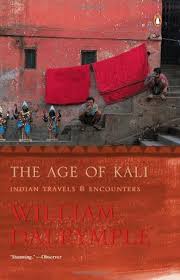
The Age of Kali
Highlights:
The Age of Kali is a panorama of the Indian subcontinent, poised between chaos, westernization and immemorial tradition& It is like Dalrymple s previous books, erudite, engaging and entertaining Martin Gayford, Spectator Books of the Year


A Guide to Battles: Decisive Conflicts in History (Oxford Quick Reference)
Highlights:
Ranging from the Peloponnesian war, to Trafalgar and Gettysburg, to the War in Iraq, this exciting book tells the stories of the most dramatic, memorable, and important conflicts in world history. This superb, one-volume reference describes almost 300 battles from around the world–from the Middle East, Asia, and Africa, as well as from Europe and the Americas. All the battles are grouped in chapters which tell the wider story of a particular era or region, whether it be the ancient world or Asia and the Middle East. Each chapter includes an introduction that sets out the historical, tactical, and technological context, and looks at current debates among military historians. In addition, individual battles are placed within the wars of which they formed a part, allowing readers understand a battle’s full military and historical significance. With detailed maps, a wide range of illustrations, and an extensive index, this book offers a gold mine of information for everyone interested in world or military history.

The Speeches and Table-Talk of the Prophet Muhammad
Highlights:
Aims to present almost all that is most enduring in the public orations and private sayings of the prophet.

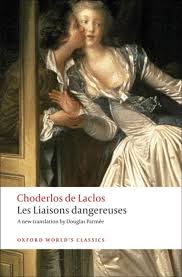
Les Liaisons Dangereuses Owc:Pb
Highlights:
The complex moral ambiguities of seduction and revenge make Les Liaisons dangereuses (1782) one of the most scandalous and controversial novels in European literature. Its prime movers, the Vicomte de Valmont and the Marquise de Merteuil–gifted, wealthy, and bored–form an unholy alliance and turn seduction into a game. And they play this game with such wit and style that it is impossible not to admire them, until they discover mysterious rules that they cannot understand. In the ensuing battle there can be no winners, and the innocent suffer with the guilty. This new translation gives Laclos a modern voice, and readers will be able to judge whether the novel is as “diabolical” and “infamous” as its critics have claimed, or whether it has much to tell us about a world we still inhabit. Douglas Parmee is Retired Fellow of Queen’s College, Cambridge. He is the translator of Nana, Attack on the Mill (Zola) and A Sentimental Journey (Flaubert) for World’s Classics. David Coward is Professor of French at the University of Leeds. He is the translator and editor of Maupassant, de Sade, and Dumas in World’s Classics.


Collected Short Stories: Volume 3
Highlights:
This third volume of Maugham’s stories, introduced and selected by the author himself, contains the celebrated series about Ashenden, a secret service agent in WWI. Based on Maugham’s own experiences with the British Intelligence service in Switzerland, the stories are vignettes in which he dramatizes both the romance and absurdity of espionage as well as its ruthlessness and brutality.
For more than seventy years, Penguin has been the leading publisher of classic literature in the English-speaking world. With more than 1,700 titles, Penguin Classics represents a global bookshelf of the best works throughout history and across genres and disciplines. Readers trust the series to provide authoritative texts enhanced by introductions and notes by distinguished scholars and contemporary authors, as well as up-to-date translations by award-winning translators.
Recently Viewed

An Era of Darkness: The British Empire in India
Highlights:
In 1930, the American historian and philosopher Will Durant wrote that Britain’s ‘conscious and deliberate bleeding of India… [was the] greatest crime in all history’. He was not the only one to denounce the rapacity and cruelty of British rule, and his assessment was not exaggerated. Almost thirty-five million Indians died because of acts of commission and omission by the British-in famines, epidemics, communal riots and wholesale slaughter like the reprisal killings after the 1857 War of Independence and the Amritsar massacre of 1919. Besides the deaths of Indians, British rule impoverished India in a manner that beggars belief. When the East India Company took control of the country, in the chaos that ensued after the collapse of the Mughal empire, India’s share of world GDP was 23 per cent. When the British left it was just above 3 per cent. The British empire in India began with the East India Company, incorporated in 1600, by royal charter of Her Majesty Queen Elizabeth I, to trade in silk, spices and other profitable Indian commodities. Within a century and a half, the Company had become a power to reckon with in India. In 1757, under the command of Robert Clive, Company forces defeated the ruling Nawab Siraj-ud-Daula of Bengal at Plassey, through a combination of superior artillery and even more superior chicanery. A few years later, the young and weakened Mughal emperor, Shah Alam II, was browbeaten into issuing an edict that replaced his own revenue officials with the Company’s representatives. Over the next several decades, the East India Company, backed by the British government, extended its control over most of India, ruling with a combination of extortion, double-dealing, and outright corruption backed by violence and superior force. This state of affairs continued until 1857, when large numbers of the Company’s Indian soldiers spearheaded the first major rebellion against colonial rule. After the rebels were defeated, the British Crown took over power and ruled the country ostensibly more benignly until 1947, when India won independence. In this explosive book, bestselling author Shashi Tharoor reveals with acuity, impeccable research, and trademark wit, just how disastrous British rule was for India. Besides examining the many ways in which the colonizers exploited India, ranging from the drain of national resources to Britain, the destruction of the Indian textile, steel-making and shipping industries, and the negative transformation of agriculture, he demolishes the arguments of Western and Indian apologists for Empire on the supposed benefits of British rule, including democracy and political freedom, the rule of law, and the railways. The few unarguable benefits-the English language, tea, and cricket-were never actually intended for the benefit of the colonized but introduced to serve the interests of the colonizers. Brilliantly narrated and passionately argued, An Era of Darkness will serve to correct many misconceptions about one of the most contested periods of Indian history.
There are no reviews yet.