

| Author | Salim T. S. Al-Hassani [Editor] |
|---|---|
| Publisher | National Geographic |

1001 Inventions: The Enduring Legacy of Muslim Civilization
Please Login to view access options.
This book can only be request by members.
Additional information
Reviews (0)
Be the first to review “1001 Inventions: The Enduring Legacy of Muslim Civilization” Cancel reply
Related Products
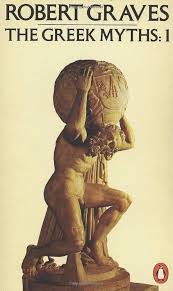
The Greek Myths (Volume 1)
Highlights:
Volume 1 of Robert Graves classical translation of Greek Myth is both reference and entertainment. Covering Myths 1 through 104, this Volume tells the stories of Endymion, Daedalus, Pygmalion, etc. This contains detailed cross-references and indexes.

The Secret of the Heart
Highlights:
Kahlil Gibran reveals his vision of the soul and understanding of the world—past, present, and future—in this rich sampling of more than twenty works. Prose tales, fables, and poems evoke the mystic East and form a world at once powerful, tender, joyous, and melancholy. This collection, penned when Gibran was still a young writer, reveals many of the themes and styles plumbed throughout his life, including his lifelong struggle against injustice in “The Crucified,” his heart-wrenching lament for a Lebanon shackled by tradition and politics in “My Countrymen,” and his masterful use of symbolism and simile in “The Secrets of the Heart.”
A writer with infinite abilities, Gibran continually seeks true beauty, no matter the form.
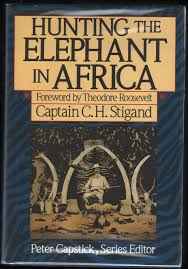
Hunting the Elephant in Africa
Highlights:
The author describes his adventures in Africa hunting for elephants, lions, buffalo, and other big-game animals

the devil is an ass
Highlights:
The plays featured have been edited from the earliest printed texts.
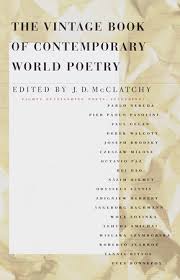
The Vintage Book of Contemporary World Poetry
Highlights:
This groundbreaking volume may well be the poetry anthology for the global village. As selected by J.D. McClatchy, this collection includes masterpieces from four continents and more than two dozen languages in translations by such distinguished poets as Elizabeth Bishop, W.S. Merwin, Ted Hughes, and Seamus Heaney. Among the countries and writers represented are: Bangladesh–Taslima Nasrin Chile–Pablo Neruda China–Bei Dao, Shu Ting El Salvador–Claribel Alegria France–Yves Bonnefoy Greece–Odysseus Elytis, Yannis Ritsos India–A.K. Ramanujan Israel–Yehuda Amichai Japan–Shuntaro Tanikawa Mexico–Octavio Paz Nicaragua–Ernesto Cardenal Nigeria–Wole Soyinka Norway–Tomas Transtromer Palestine–Mahmoud Darwish Poland–Zbigniew Herbert, Czeslaw Milosz Russia–Joseph Brodsky, Yevgeny Yevtushenko Senegal–Leopold Sedar Senghor South Africa–Breyten Breytenbach St. Lucia, West Indies–Derek Walcott
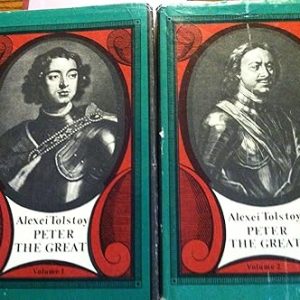
Peter The Great
Highlights:
To Alexei Tolstoy (1883-1945) history, in addition to an artistic theme, was also a means of studying life. The novel “Peter the Great” was preceded by various works on this theme (Peters Day, On the Rack) which depict the formative stages of the authors conception of history. Tolstoy published the first part of the novel in 1929, the second in 1934, working on the third part until the day of his death, yet leaving it unfinished.The novel is dynamic. It shows the epoch and Peter himself, a true national hero of Russia and creator of the Russian state, in all their magnificence and multiplicity, in all their contradictions. The author describes the transformation of Russia into a mighty power. The novel is imbued with pride for Russia and faith in the Russian people. This profoundly realistic work has greatly influenced Soviet writers working in the field of history. Tolstoy won the Stalin Prize for this novel.

There are no reviews yet.