

| Author | Franklin Edgerton [Translator] |
|---|---|
| Publisher | Harvard University Press |

The Bhagavad Gita
Highlights:
Edgarton analyzes the doctrines of the Gita with clearness and acuteness, and his expose is full of well chosen quotations and suggestive remarks.
Please Login to view access options.
This book can only be request by members.
Additional information
Reviews (0)
Be the first to review “The Bhagavad Gita” Cancel reply
Related Products


Sentimental Education
Highlights:
‘Sentimental Education’ has been described both as the first modern novel and as a novel to end all novels. Weaving a poignant love story into his account of the 1848 revolution, Flaubert shows a society in the grip of stereotypes, on every level. There is something farcical in his depiction of characters who aspire to act but are dogged by cliche at every turn. To a greater extent even than Madame Bovary, ‘Sentimental Education’ is an indictment of modern consumerism, contrasting the hollowness of material achievement with the lasting beauty of the ideal. Flaubert’s study of success and failure offers us a terrible sadness in a terrible beauty, yet is one of the world’s great comic masterpieces. AUTHOR: Gustave Flaubert (1821-1880) achieved instant success and fame, indeed notoriety, with his first novel, ‘Madam Bovary’, published in 1857. He was prosecuted on the basis that the novel was ‘offensive to public morality and religion’. Although found not guilty, Flaubert earned a lecture from the judge on the dangers of ‘realism’. The book was a huge success, and Flaubert came to be considered one of the great novelists of Western literature.

The World of Psmith – Omnibus
Highlights:
This omnibus contains three full-length novels: “Psmith in the City”, “Psmith Journalist” and “Leave it to Psmith”.


De Anima (On the Soul)
Highlights:
For Plato the soul was the seat of being, metaphysically distinct from the body that it was forced temporarily to inhabit. In ‘De Anima’, Plato’s student, Aristotle sought to set out his theory of soul as the ultimate reality of embodied form and produced a masterpiece of philosophical insight.
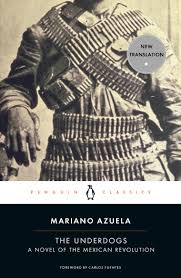
The Underdogs: A Novel of the Mexican Revolution
Highlights:
The greatest novel of the Mexican Revolution, in a brilliant new translation by an award-winning translator The Underdogs is the first great novel about the first great revolution of the twentieth century. Demetrio Macias, a poor, illiterate Indian, must join the rebels to save his family. Courageous and charismatic, he earns a generalship in Pancho Villa’s army, only to become discouraged with the cause after it becomes hopelessly factionalized. At once a spare, moving depiction of the limits of political idealism, an authentic representation of Mexico’s peasant life, and a timeless portrait of revolution, The Underdogs is an iconic novel of the Latin American experience and a powerful novel about the disillusionment of war.


The Quest for Meaning: Developing a Philosophy of Pluralism
Highlights:
In The Quest for Meaning: Developing a Philosophy of Pluralism, Tariq Ramadan embarks on a journey to uncover the profound truths that bind us together. In a world so full of different beliefs and viewpoints, how can we find peace in our shared humanity? Acclaimed thinker and philosopher Tariq Ramadan explores universal ideas such as love, respect, truth, and tolerance, and examines questions such as how can men and women relate to each other? What is the true nature of equality? What does “civilization” really mean? In doing so, he opens our minds to a new view of humanity. Whether we are Christian or Buddhist, Jewish or Muslim, secularist or believer, he reveals that all traditions of thought spring from the same place, and guides us to see past what divides us and discover the beauty of what we have in common. This book has resonance for all of us, showing why, eventually, all different spiritual paths lead to the human heart.

Traveling with Che Guevara
Highlights:
Published for the first time in the U.S.—one of the two diaries on which the movie The Motorcycle Diaries is based—the moving and at times hilarious account of Che Guevara and Alberto Granado’s eight-month tour of South America in 1952.
In 1952 Alberto Granado, a young doctor, and his friend Ernesto Guevara, a 23-year-old medical student from a distinguished Buenos Aires family, decided to explore their continent. They set off from Cordoba in Argentina on a Norton 500cc motorbike and traveled through Chile, Peru, Colombia, and Venezuela. The duo’s adventures vary from the suspenseful (stowing away on a cargo ship, exploring Incan ruins) to the comedic (falling in love, drinking, fighting…) to the serious (volunteering as firemen and at a leper colony). They worked as day laborers along the way—as soccer coaches, medical assistants, and furniture movers. The poverty and exploitation of the native population started the process that was to turn Ernesto—the debonair, fun-loving student—into Che, the revolutionary who had a profound impact on the history of several nations.
Originally published in Spanish in Cuba in 1978, the first English translation was published by Random House UK in 2003. The movie, based on Granado’s and Che’s diaries, directed by Walter Salles (Central Station, Behind the Sun), was produced by Robert Redford and others. Shown at the Sundance Film Festival, it generated great reviews and a frenzied auction for distribution rights, which was won by Focus Features. Granado, now 82, was a consultant to Salles during the production. 10 b/w photos.
There are no reviews yet.