

Related Products


Traveling with Che Guevara
Highlights:
Published for the first time in the U.S.—one of the two diaries on which the movie The Motorcycle Diaries is based—the moving and at times hilarious account of Che Guevara and Alberto Granado’s eight-month tour of South America in 1952.
In 1952 Alberto Granado, a young doctor, and his friend Ernesto Guevara, a 23-year-old medical student from a distinguished Buenos Aires family, decided to explore their continent. They set off from Cordoba in Argentina on a Norton 500cc motorbike and traveled through Chile, Peru, Colombia, and Venezuela. The duo’s adventures vary from the suspenseful (stowing away on a cargo ship, exploring Incan ruins) to the comedic (falling in love, drinking, fighting…) to the serious (volunteering as firemen and at a leper colony). They worked as day laborers along the way—as soccer coaches, medical assistants, and furniture movers. The poverty and exploitation of the native population started the process that was to turn Ernesto—the debonair, fun-loving student—into Che, the revolutionary who had a profound impact on the history of several nations.
Originally published in Spanish in Cuba in 1978, the first English translation was published by Random House UK in 2003. The movie, based on Granado’s and Che’s diaries, directed by Walter Salles (Central Station, Behind the Sun), was produced by Robert Redford and others. Shown at the Sundance Film Festival, it generated great reviews and a frenzied auction for distribution rights, which was won by Focus Features. Granado, now 82, was a consultant to Salles during the production. 10 b/w photos.

The World of Psmith – Omnibus
Highlights:
This omnibus contains three full-length novels: “Psmith in the City”, “Psmith Journalist” and “Leave it to Psmith”.



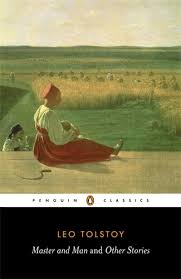
Master and Man and Other Stories
Highlights:
The ten stories collected in this volume demonstrate Tolstoy’s artistic prowess displayed over five decades – experimenting with prose styles and drawing on his own experiences with humour, realism and compassion. Inspired by his experiences in the army, ‘The Two Hussars’ contrasts a dashing father and his mean-spirited son. Illustrating Tolstoy’s belief that art must serve a moral purpose, ‘What Men Live By’ portrays an angel sent to earth to learn three existential rules of life, and ‘Two Old Men’ shows a peasant abandoning his pilgrimage to the Holy Land in order to help his neighbours. And in the highly moving ‘Master and Man’, Tolstoy depicts a mercenary merchant travelling with his unprotesting servant through a blizzard to close a business deal – little realizing he may soon have to settle accounts with his maker. For more than seventy years, Penguin has been the leading publisher of classic literature in the English-speaking world. With more than 1,700 titles, Penguin Classics represents a global bookshelf of the best works throughout history and across genres and disciplines. Readers trust the series to provide authoritative texts enhanced by introductions and notes by distinguished scholars and contemporary authors, as well as up-to-date translations by award-winning translators.

There are no reviews yet.